I almost left it there.
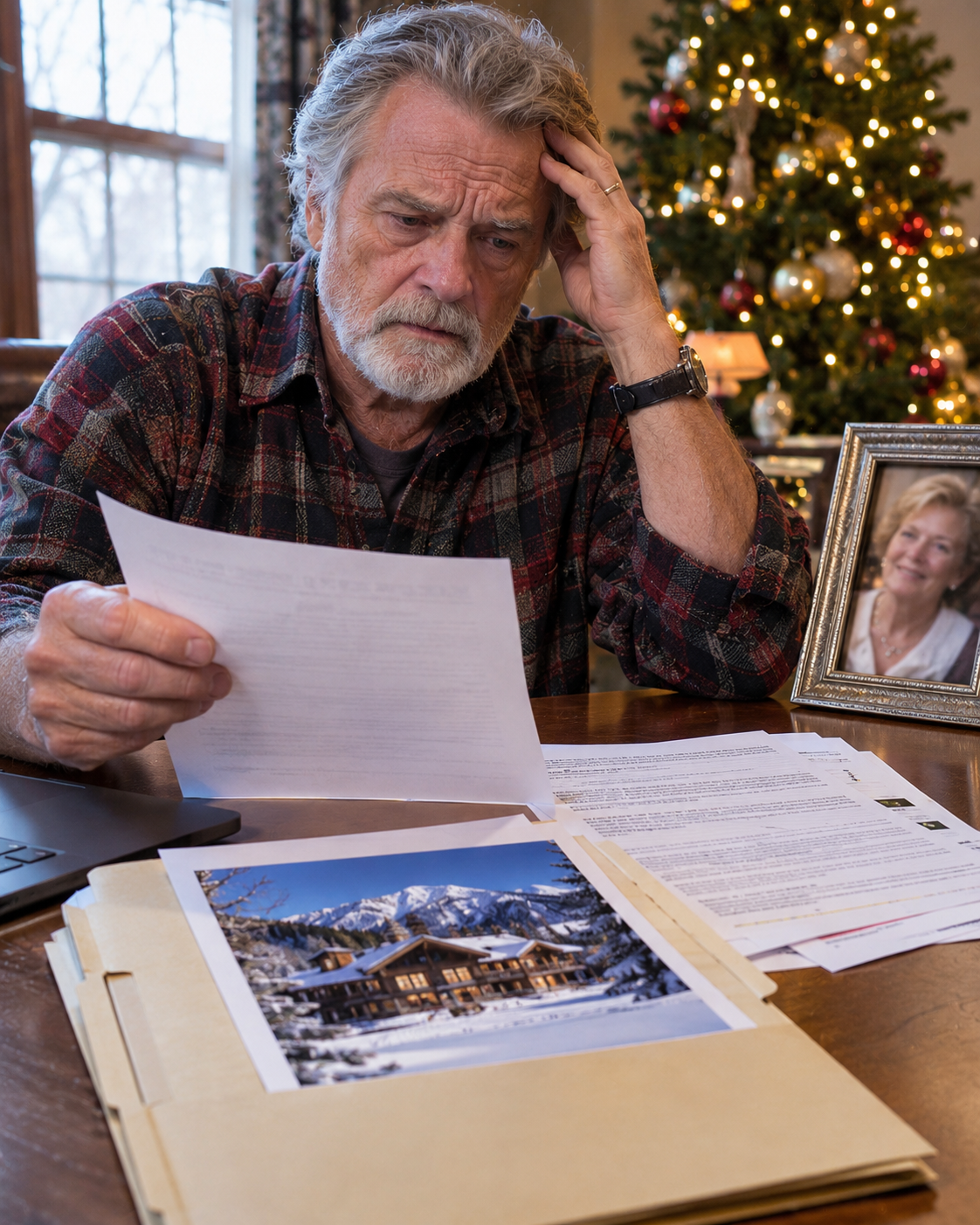
At sixty-nine, I had become very good at knowing which pieces of mail could wait. Utility bill. Insurance notice. Catalog. Bank statement.
This one bothered me for no reason I could name.
I opened it beside Eleanor’s blue coffee mug.
Then I saw the charge.
Thirty thousand dollars.
Telluride, Colorado.
I checked the last four digits of the card twice.
Preston.
My son had been an authorized user for years. Eleanor and I had added him when his job involved travel and he was constantly juggling reimbursements. The arrangement should have ended long ago.
Instead, it had drifted into permanence.
That happened with a lot of things in our family.
A favor became a habit.
A habit became an expectation.
An expectation became something I was rude for questioning.
I called him.
“Why is there a thirty-thousand-dollar resort charge on my account?”
He sighed.
“Dad, it’s Christmas.”
“That is not an answer.”
“You do this every year. Everybody tries to enjoy themselves, and you turn everything into a discussion about money.”
I looked toward the chair across from me.
Eleanor had been gone three years.
Preston knew exactly which memory to reach for.
“Mom would have wanted us to enjoy life.”
“Do not use your mother to justify a charge I never approved.”
“You’ll understand when you see the itinerary.”
Fifteen minutes later, an email arrived.
He had forwarded the entire chain by mistake.
Flights.
Private transportation.
Ski rentals.
Restaurant reservations.
A six-bedroom luxury lodge.
Then I found my name.
Roadside motel.
Three miles away.
At first, I assumed the booking service had made an error.
Then I read Marissa’s message.
Raymond cannot stay in the main house.
Preston had replied:
Already handled.
Another message explained why.
Apparently my flannel shirts looked shabby in photographs.
My “gloomy expression” would ruin the polished Christmas album Marissa planned to post online.
They wanted me brought to the lodge for dinner, then sent back to the motel afterward.
One more message said:
Make sure he brings the card. Raymond can cover dinners and incidentals.
I sat very still.
Eleven people would sleep under the roof my card had paid for.
Preston.
Marissa.
Her parents.
Her sisters.
Their husbands.
Two cousins.
Everyone except me.
I worked thirty years at an auto plant outside Cleveland.
I knew what concrete did to knees.
I knew the ache of second shift in January, when the parking lot wind cut through a coat before you reached your truck.
Eleanor and I had made choices most people never noticed.
We kept one vehicle longer than we wanted.
We postponed vacations.
We paid Preston’s college tuition so he could graduate without debt.
We helped with his first apartment.
Then his wedding.
Then a business setback he promised was temporary.
None of those things made me a saint.
They made me a father.
But somewhere along the way, Preston had started treating my sacrifices like proof that I could always make one more.
I kept reading.
That was when I found the messages about my house.
Marissa wanted me out before spring.
“The property value is being wasted on one person,” she wrote.
Preston said January would be better.
After the Telluride trip, he thought I would be tired enough to accept “simplifying.”
The plan was obvious.
Convince me the four-bedroom colonial was too much for one widower.
Sell it.
Use part of the equity to cover debts they had never told me about.
I printed every page.
The printer clicked behind me while the Christmas lights blinked across the living room.
Then my phone buzzed.
A banking alert.
Five thousand dollars had left the joint savings account I had opened for Preston decades earlier.
That account had originally been for emergencies.
I called the bank.
The representative confirmed the withdrawal.
Because Preston was a joint owner, it was not an unauthorized withdrawal in the simple sense. He had legal access to the funds.
That distinction mattered.
I hated it.
But it mattered.
“Can I restrict future access?” I asked.
She explained my options.
The cleanest one was to withdraw my remaining share, close the joint account if the ownership terms allowed it, and stop using joint products entirely.
“I’ll come in tomorrow.”
Before bed, I went upstairs to the wall safe behind the landscape painting.
Inside were the deed, insurance papers, old tax records, our marriage certificate, and the dark blue velvet box containing Eleanor’s anniversary jewelry.
Except the box was gone.
I searched the safe twice.
Then the bedroom.
Then the dresser.
Nothing.
I had bought those pieces for Eleanor on our twentieth anniversary after selling an old pickup truck I had restored in the garage.
After she died, I decided they would go to Emma, our granddaughter, when she turned eighteen.
Only Eleanor and Preston had ever known where the spare safe key used to be hidden.
I photographed the open safe.
Then I sat on the edge of the bed.
For the first time, I stopped calling what was happening “family tension.”
The next morning, I carried a manila folder into my attorney’s office.
Julian Vance had handled our wills for years.
He read the emails.
He studied the bank records.
He asked about the missing jewelry.
Then he looked at me.
“Raymond, what do you want?”
The question hit me harder than I expected.
Not what Preston needed.
Not what would keep Christmas peaceful.
Not what Eleanor might have done.
What did I want?
“I want my decisions to belong to me again.”
Julian nodded.
We spent the next several hours separating what could be changed immediately from what required process.
I revoked the old financial power of attorney Preston had held for emergencies.
I updated beneficiary instructions where appropriate.
I moved my individual accounts to new access credentials.
I removed Preston as an authorized user from every card I controlled.
I closed the old shared credit arrangement.
We discussed the house carefully.
Julian did not wave a pen and magically make it untouchable.
He reviewed the deed first.
The house was mine.
Then he helped me place it into a revocable trust structured around my wishes, with me retaining control while I was alive and competent.
No one could sell it merely because they thought I was old.
The thirty-thousand-dollar resort charge was more complicated.
Preston had been an authorized user when he made it.
That meant I could not simply announce that the charge was “fraud” and expect the bank to erase it.
I called the issuer anyway.
I told them I had not approved that specific purchase.
They opened a dispute and advised me to contact the merchant immediately.
The outcome would depend on the account terms, the resort’s cancellation rules, and what evidence showed about the booking.
So I called the resort.
I explained that I was the primary cardholder, would not be traveling, and had not approved paying for eleven other guests.
The reservation manager was polite.
She was also careful.
A large holiday booking had penalties.
Some amounts might be refundable.
Some might not.
They froze any new charges against my card while they reviewed the account.
That was enough for the moment.
The strangest part was how quiet everything felt afterward.
Sign here.
Initial there.
Confirm identity.
Change password.
Remove access.
For years, I imagined boundaries would sound like shouting.
Instead, most of mine sounded like paper sliding across a desk.
That evening, I sat beneath the Christmas tree and looked at the Telluride itinerary one last time.
I wrote two sentences across the first page.
Not attending.
Not paying.
On December twenty-third, Preston began sending instructions.
Don’t miss the airport shuttle.
Pack warm clothes.
The motel shuttle runs every hour.
Marissa wants everyone ready for pictures by five.
Call me when you land.
I replied once.
Have a wonderful Christmas.
Then I turned my phone face down.
Dad, what does that mean?
Then:
Are you already at the airport?
Then:
Dad?
I left the phone on the counter.
For the first time in years, I did nothing.
No explanation.
No apology.
No attempt to rescue him from the consequences of choices he had made without asking me.
I poured coffee into Eleanor’s blue mug.
Snow gathered along the back fence.
The house was quiet.
Not lonely.
Quiet.
I had spent a long time confusing those two things.
By late morning, a photo appeared in the family group chat.
Marissa standing in an airport terminal with a white coat belted tightly around her waist.
Her mother beside her.
Preston in sunglasses indoors.
Caption:
Telluride Christmas begins!
I almost laughed.
Then I noticed Emma at the edge of the picture.
She was seventeen.
Her smile looked uncertain.
I had not told her anything.
Whatever happened between Preston and me, Emma was not a messenger.
She was not responsible for fixing adults.
I put the phone away.
At noon, I drove to the cemetery.
Eleanor’s grave was under two inches of fresh snow.
I brushed the stone clean with my glove.
“You would be furious with both of us,” I said.
The wind carried the words away.
Eleanor had loved Christmas.
But she had not loved foolishness.
That distinction mattered more than Preston understood.
She would spend three hours making cookies for neighbors and then argue for twenty minutes over a billing error.
She was generous because she chose to be.
Not because anyone was entitled to take.
I stayed until my hands hurt from the cold.
Then I drove home.
At 3:57 that afternoon, my phone rang.
Preston.
I watched his name light the screen.
I did not answer.
It rang again at 4:01.
Then 4:03.
Then Marissa called.
Then her father.
Then Preston again.
Finally, at 4:11, I answered.
“Dad, what did you do?”
His voice was low and furious.
I sat down at the kitchen table.
“What happened?”
“You know what happened.”
“No. I’m in Cleveland.”
“The lodge says the card on file is locked.”
“I removed you as an authorized user.”
Silence.
Then his voice rose.
“You canceled the card while we were traveling?”
“I canceled your access to my account.”
“There are eleven people here.”
“I know.”
“The resort wants another payment method for the remaining balance and incidentals.”
“Then give them one.”
“You know my card won’t cover that kind of hold.”
That told me more than he intended.
“How much debt are you carrying, Preston?”
“Don’t change the subject.”
“I’m not.”
Behind him, I could hear voices.
Marissa.
Someone else asking whether the rooms were ready.
Preston walked away from them.
“You are humiliating me.”
“No. I am declining to finance something I did not agree to.”
“You already paid for the lodge.”
“The original charge is under review.”
His breathing changed.
“You disputed it?”
“I told the bank and the resort the truth.”
“You’re trying to ruin Christmas.”
There it was.
The line I had heard for years.
I ruined Christmas if I asked why a restaurant bill was four figures.
I ruined Christmas if I did not want to rent a limousine.
I ruined Christmas if I suggested gifts for adults should have a budget.
This year, I had stayed home.
Apparently I could still ruin it from two thousand miles away.
“What exactly has gone wrong?” I asked.
“The resort says part of the booking may be canceled if we can’t provide a valid card.”
“Then provide one.”
“Dad.”
“No.”
He went quiet.
Not defeated.
Surprised.
He had heard me say no before.
He had never believed it was final.
Then I heard Marissa in the background.
“Tell him Emma is crying.”
My body tightened.
“Put Emma on.”
A pause.
Then my granddaughter’s voice.
“Grandpa?”
“Are you okay?”
“Yes.”
“Are you somewhere safe?”
“Yes. We’re in the lobby.”
“Do you have your coat?”
She sounded confused.
“Yes.”
“Good. Do you have your phone charger and your identification?”
“Grandpa, what’s happening?”
“Something between your parents and me. It is not your job to solve it.”
She lowered her voice.
“Dad says you canceled Christmas.”
“I changed access to my money.”
Another pause.
“Is that why Mom is yelling?”
“Probably.”
I hated that she was hearing it.
“Listen to me. If you need a safe place tonight, call me. I’ll help you directly. I am not leaving you stranded.”
“Okay.”
“Hand the phone back to your father.”
Preston returned.
“You’ll help her but not us?”
“She is seventeen.”
“I’m your son.”
“You are forty-two.”
That was the first moment he had no answer.
The resort ultimately allowed the group to remain for the night because the initial deposit had cleared before the dispute was filed and because Preston produced another card for a smaller temporary hold.
But the six-bedroom lodge was no longer fully secured for the week.
The manager was not cruel.
She was running a business.
If the remaining payment was not guaranteed by the next morning, the reservation would be shortened and some services canceled.
Private transport disappeared first.
Then prepaid ski rentals were suspended.
Then a Christmas Eve dinner reservation requiring a deposit was released.
Each time, Preston called.
Each time, I said the same thing.
“I’m not paying.”
Around seven, Marissa sent me a voice message.
She said I had embarrassed her parents.
She said her sisters had spent money on flights based on promises Preston made.
She said I was punishing innocent people.
That last part bothered me.
Because some of them were innocent.
Her parents had not opened my card account.
Her sisters had not taken my jewelry.
I called Julian.
“Am I doing something wrong by leaving them out there?”
“You are not responsible for financing adults’ vacations,” he said.
“That wasn’t my question.”
He knew what I meant.
“If someone is in danger, help them get safe. If someone simply cannot afford the luxury trip they expected you to fund, that is different.”
I appreciated the distinction.
At nine, I called Emma again.
She answered from a hallway.
The family had managed to keep three rooms for the night instead of the full lodge arrangement.
People were doubling up.
Marissa was furious.
Preston was trying to borrow against a credit line.
“Do you want to come home?” I asked.
“I don’t know.”
“You don’t have to protect anyone’s feelings.”
“I know.”
“Do you want to come home?”
“Yes.”
That answer was clear.
I booked her a flight to Cleveland for Christmas Eve.
Directly.
On my card.
In her name.
I sent the confirmation only to her.
When Preston found out, he called me at 10:14.
“You’re teaching her to run away from family problems.”
“No,” I said. “I’m giving her a choice.”
“You never gave me choices.”
The words stopped me.
“What does that mean?”
He exhaled sharply.
“Forget it.”
Then he hung up.
I sat there for several minutes.
For the first time since the statement arrived, I wondered whether Preston’s entitlement had grown from something more complicated than greed.
That did not excuse what he had done.
But it meant I needed to understand it.
The next morning, I drove to the airport.
Emma came through baggage claim carrying a backpack and a small suitcase.
When she saw me, she did not wave.
She walked straight into my arms.
“I’m sorry,” she whispered.
“For what?”
“For Christmas.”
I pulled back.
“You didn’t do anything.”
Her face crumpled.
“I think Dad took Grandma’s jewelry.”
The noise of the terminal seemed to disappear.
“What makes you think that?”
Emma reached into her coat pocket.
Then she placed a small pawn-shop receipt in my hand.
Emma kept her hands tucked beneath her thighs.
I unfolded the receipt.
The pawn shop was in Parma.
The date was six weeks earlier.
The description was vague but recognizable.
Gold necklace.
Diamond pendant.
Matching earrings.
My stomach tightened.
“Where did you get this?”
“I found it in Dad’s desk.”
“When?”
“Last week.”
“Why were you in his desk?”
“I was looking for stamps for college applications.”
That sounded like Emma.
She had inherited Eleanor’s habit of putting postage on everything immediately.
“There was an envelope from the pawn shop. I opened it because Grandma’s name was written on one of the old appraisal copies.”
I looked at her.
“You saw an appraisal?”
She nodded.
“I took a picture. I didn’t know what it meant.”
“Why didn’t you tell me?”
Her eyes filled.
“Because Dad said you were getting forgetful.”
My grip tightened around the paper.
“What?”
“He said you lose things now. He said sometimes you think people took them.”
I stared through the windshield.
Cars moved slowly between concrete pillars.
“He said that?”
“He and Mom talk about your house all the time.”
“Emma.”
She looked at me.
“Has your father ever told you I agreed to sell it?”
“No.”
“Has he ever told you I asked him to manage my finances?”
“No.”
“Has he ever told you I was diagnosed with anything that affects my memory?”
“No.”
“Good. Because none of those things happened.”
She began crying.
Quietly.
“I didn’t know what to believe.”
“You were not supposed to have to decide.”
I called Julian from the car.
He told me not to confront Preston about the pawn receipt.
“Preserve it. Photograph it. Send me a copy. Then contact police.”
I did exactly that.
The responding officer met us at my house.
His name was Officer Bell.
He listened carefully.
He did not say, “Your son stole it, case closed.”
He asked practical questions.
Who owned the jewelry?
When had I last seen it?
Who had access to the home?
Where had the spare safe key been?
Could anyone else have removed the pieces?
Did I have photographs or appraisals?
I brought out Eleanor’s insurance file.
There were photographs.
Receipts.
An appraisal from years earlier.
Emma provided the picture from Preston’s desk.
The officer explained that a pawn receipt connected to Preston would be important, but the police would still have to verify the transaction and establish how the jewelry came into his possession.
I appreciated that.
I wanted the truth.
Not theater.
The pawn shop was closed for Christmas Eve.
Officer Bell documented everything and gave me a report number.
Then he left.
Emma stood near the Christmas tree staring at the little village Eleanor had collected.
“Dad told me Grandma wanted him to have everything.”
“That is not true.”
“How do you know?”
“Because I was married to her for forty-one years.”
Emma wiped her face.
“Did she leave a will?”
“Yes.”
“Can I see it?”
I hesitated.
Not because there was anything to hide.
Because I did not want a seventeen-year-old reading estate documents on Christmas Eve to settle an argument between adults.
But she had already been dragged into it.
So I showed her the relevant page.
Eleanor had left her personal property to me.
There was no special gift of the jewelry to Preston.
Emma read it twice.
Then she sat down.
“He lied.”
“Yes.”
“Why?”
“I don’t know.”
That was the honest answer.
At eleven that morning, Preston called.
I let it ring.
Then again.
Then a message.
Emma’s flight was not your decision to make.
I replied:
She asked to come home. She is safe with me.
He called immediately.
“Put her on.”
“She can decide whether she wants to speak.”
“I’m her father.”
“Yes.”
“You are undermining me.”
“I am not discussing this while you’re angry.”
“Dad, I swear to God—”
I ended the call.
My hands shook afterward.
Not from fear.
From habit.
For decades, my body had learned to treat Preston’s anger as something that needed fixing.
Emma came into the kitchen.
“You hung up on him.”
“I did.”
“He hates that.”
“I noticed.”
A small smile appeared.
Then disappeared just as quickly.
“Grandpa, are you going to have him arrested?”
“No.”
She looked surprised.
“I filed a police report. The police will investigate. I do not control what happens next.”
“But if he took it?”
“Then he will have to answer for it.”
“Will you forgive him?”
“I don’t know yet.”
That was another answer she deserved.
Christmas Eve became quieter after that.
Emma helped me make Eleanor’s stuffing.
She corrected the amount of sage twice.
At four, a delivery arrived.
A bouquet from Marissa’s parents.
The card read:
We did not know Raymond. We are sorry.
I believed them.
Not because I wanted to.
Because their actions matched the limited facts I had.
They had paid for their own return flights and left Colorado that morning.
Marissa’s sisters had done the same.
The trip had fallen apart.
But nobody was stranded.
Nobody was homeless.
Nobody was in danger.
The adults simply had to pay their own way.
That evening, Emma and I ate at the kitchen table.
No lodge.
No photographer.
No matching sweaters.
Just ham, potatoes, stuffing, green beans, and two kinds of pie because Eleanor had always considered one pie insufficient.
At seven, Preston called again.
This time Emma answered.
She put him on speaker only after asking me.
“Emma, you need to come back.”
“I’m staying with Grandpa.”
“You don’t understand what he’s doing.”
“I understand enough.”
“Your grandfather is punishing this family because he has control issues.”
I watched Emma’s jaw tighten.
“Did you pawn Grandma’s jewelry?”
Silence.
Long enough.
Then Preston said, “Who told you that?”
I closed my eyes.
Emma looked at me.
“Dad.”
“That jewelry was family property.”
“No,” I said.
He heard me.
His voice changed.
“So this is what you’re doing? Turning my daughter against me?”
“Nobody forced you to say what you just said.”
“I didn’t steal anything.”
“Then explain how it reached the pawn shop.”
“I borrowed against it.”
“You had no permission.”
“It was going to come back.”
“When?”
“After Christmas.”
“With whose money?”
He stopped.
Emma turned away.
The truth was no longer dramatic.
It was small and ugly.
Preston had debts.
He needed cash.
He knew where the jewelry was.
He told himself he would replace it before anyone noticed.
That was how people crossed lines.
Not always with a grand plan.
Sometimes one excuse at a time.
“I’m ending this call,” I said.
“Dad, wait.”
“No.”
“The pawn shop only gave me twelve thousand. I can get it back.”
I froze.
Twelve thousand.
That was the first number we had.
“Do not contact the pawn shop,” I said.
“Why?”
“Because there is now a police report.”
He went silent.
“You called the police on me?”
“I reported missing property.”
“I’m your son.”
“And it was Eleanor’s.”
He hung up.
Emma cried after that.
Not loudly.
I sat beside her until she stopped.
I did not tell her everything would be fine.
Sometimes that phrase is a lie adults use because uncertainty scares them.
Instead, I told her what I knew.
She could stay with me.
Her college applications would still go out.
Christmas dinner would still happen.
Her father loved her, even if he was behaving badly.
And none of this was her fault to repair.
The next morning, Christmas Day, the phone remained quiet until almost noon.
Then Julian called.
Not to talk about the house.
Not about the resort.
About the bank.
The card issuer had received documentation from the resort.
The initial thirty-thousand-dollar charge was not as simple as Preston had described.
Only twelve thousand had actually posted as a nonrefundable holiday deposit.
The remaining balance had been scheduled for capture at check-in.
Because I had canceled access and contacted the resort before that occurred, the larger second payment had failed.
The dispute over the twelve-thousand-dollar deposit would continue.
I might recover some.
I might not.
For the first time, the number felt almost secondary.
I had stopped the next charge.
Stopped the next withdrawal.
Stopped the next assumption.
That afternoon, Emma and I walked through the snow to the cemetery.
She placed a small evergreen branch beside Eleanor’s stone.
“Grandma would be mad at Dad,” she said.
“Yes.”
“Would she stop loving him?”
I looked at my wife’s name carved into granite.
“No.”
Emma nodded.
Then she asked the harder question.
“Can both be true?”
“Yes.”
That answer I knew.
He did not come to my house.
Julian had advised me to keep communication in writing while the property and financial issues were being sorted.
Officer Bell had also asked that I avoid arguing about the jewelry while investigators verified the pawn transaction.
So Preston sent an email.
Subject line:
We need to talk like family.
I read it twice.
Then I replied:
We can meet at Julian’s office.
Preston answered within minutes.
I’m not meeting with a lawyer to talk to my father.
Then we will not meet yet.
That was the entire exchange.
Emma stayed with me through New Year’s.
Her parents agreed after several difficult calls.
I was careful not to turn my house into a place where she could avoid every rule she disliked.
She still had a curfew.
She still worked on applications.
She still had to text her parents when she arrived somewhere.
Boundaries were not the same thing as sides.
On December twenty-ninth, Officer Bell called.
The pawn shop had records.
Preston had presented identification.
He had signed the transaction.
The jewelry description matched my appraisal closely.
The items were still in the shop’s possession because the redemption period had not expired.
The detective assigned to the case wanted to speak with me.
At the station, Detective Lena Ortiz explained the situation without drama.
Because Preston had taken property belonging to me without permission and pledged it for money, the matter could support criminal charges.
The exact offense would depend on value, evidence, and the prosecutor’s review.
My relationship to him did not erase that.
Neither did repayment.
“But repayment can matter later,” she added.
“In sentencing?”
“In charging discussions, restitution, resolution. It can matter in several ways. It doesn’t undo what happened.”
I nodded.
“Can I get the jewelry back?”
“There’s a process. The shop has rights too because it accepted the items in a transaction. We’re documenting the property. Your attorney can coordinate with us.”
Nothing happened instantly.
That surprised Emma.
Television had trained her to expect a detective to walk into a pawn shop, grab a necklace, and return it before dinner.
Real life involved reports.
Ownership proof.
Photographs.
Statements.
Phone calls.
The jewelry eventually came back, but not that day.
Meanwhile, Julian began examining the old financial arrangements between Preston and me.
The five thousand dollars from the joint savings account was legally difficult.
Preston had withdrawal rights.
I could not call it theft simply because I disliked what he did.
What I could do was close the arrangement going forward.
That distinction became important when Preston finally agreed to meet.
January fifth.
Julian’s conference room.
Preston arrived alone.
He looked older than he had before Christmas.
Not wiser.
Just tired.
He sat across from me.
Julian offered coffee.
Nobody wanted any.
Preston spoke first.
“Are you actually trying to prosecute me?”
“No.”
He blinked.
“The police are investigating property I reported missing.”
“Same thing.”
“No. It is not.”
“You know what this could do to my job.”
“You knew where the jewelry came from.”
His mouth tightened.
“I was going to redeem it.”
“When?”
“I told you. After Christmas.”
“With what money?”
He looked away.
Julian remained silent.
That was one reason I wanted him there.
Silence had weight when it came from someone not emotionally involved.
Finally, Preston said, “We’re in debt.”
“How much?”
He rubbed both hands over his face.
“About eighty-six thousand.”
I thought I had misheard.
“Besides your mortgage?”
“Yes.”
“Credit cards?”
“Cards. Personal loan. A line of credit.”
“What happened?”
“Life happened.”
“No.”
He looked at me sharply.
“Do not give me a slogan. Tell me what happened.”
For a few seconds, he looked like the boy who used to sit at my workbench after school.
Then the adult returned.
“Marissa’s business slowed down. We renovated the kitchen. Emma’s school costs more. We traveled. I had a bonus that didn’t come through.”
“You spent money before receiving it.”
“Partly.”
“And the Telluride trip?”
“We thought we could manage it.”
“With my card.”
He said nothing.
“Why was I in a motel?”
His face changed.
Of all the financial questions, that one embarrassed him.
“That was Marissa.”
“You agreed.”
“She said the lodge was full.”
“It had six bedrooms.”
“She wanted her family comfortable.”
“And me?”
“You don’t even like skiing.”
“That is not the question.”
He looked down.
Finally, he said, “You make things uncomfortable.”
I almost laughed.
“How?”
“You judge everything.”
“By asking what it costs?”
“You sit there quiet. You wear the same shirts. Everybody feels like you disapprove of them.”
“I worked in a factory, Preston. I am not an accusation.”
He looked toward the window.
“My whole life, you and Mom were proud of how little you needed.”
“That was our choice.”
“It always felt like a standard.”
That was the first useful thing he said.
I let it sit.
“Did I make you feel ashamed for wanting more?”
He hesitated.
“Sometimes.”
I thought about it honestly.
There were moments.
A sports car he wanted at twenty-three.
A destination wedding idea.
Expensive furniture.
I had made comments.
Some sharper than necessary.
“That may be true,” I said.
Preston looked surprised.
“I could have spoken differently.”
His shoulders loosened.
Then I continued.
“But that does not explain the jewelry. It does not explain planning to sell my house. It does not explain thirty thousand dollars on my card.”
His face hardened again.
“I knew there’d be a but.”
“There has to be.”
He stood.
“This is pointless.”
“No. This is accountability.”
“You just want me to beg.”
“I want facts.”
He stared at me.
Then he sat again.
For the next hour, he gave them.
The renovation had cost more than planned.
Marissa had tried to maintain a lifestyle around people wealthier than they were.
Preston had encouraged it because it made him feel successful.
They refinanced once.
Then used cards.
Then personal loans.
The Telluride trip was supposed to impress Marissa’s family and repair tensions among them.
My money had become the invisible support beam beneath all of it.
When one beam was not enough, they started looking at the house.
“What did you plan to do with me?” I asked.
“A condo.”
“Who would choose it?”
“We would help.”
“That means you.”
He exhaled.
“Yes.”
“Who would control the house proceeds?”
“We thought you could invest most of it.”
“And lend some to you.”
His silence answered.
Julian finally spoke.
“Preston, your father’s revocation of your financial authority is complete. His trust is valid. His individual accounts are secured. There is no current legal mechanism by which you can sell or pledge his home.”
Preston glared at him.
“I know.”
“The resort dispute is separate. The jewelry matter is separate. Do not mix them.”
Then Julian turned to me.
“Raymond, you also need to decide whether you expect repayment on prior transfers that were gifts or shared-account withdrawals.”
That mattered.
Not every dollar Preston had received over the years was a loan.
I could not rewrite history because I was angry.
“The five thousand from the joint account is gone,” I said. “I won’t chase it.”
Preston looked at me.
“But there will never be another joint account.”
His eyes dropped.
“The jewelry?”
“That is different.”
“I’ll repay the pawn loan.”
“That does not erase taking it.”
“I know.”
It was the first time he said those words.
I know.
No defense attached.
No Christmas excuse.
No Eleanor.
Just two words.
The meeting ended without reconciliation.
Preston left through the elevator.
I stayed behind.
Julian gathered his papers.
“You all right?”
“No.”
He nodded.
“Good meeting, then.”
I looked at him.
He smiled faintly.
“The meetings that matter usually don’t make anyone feel wonderful.”
When I got home, Emma was at the dining table working on an essay.
She looked up.
“How did it go?”
I took off my coat.
“He told the truth about some things.”
“Did he apologize?”
“Not really.”
She nodded.
“Sounds like Dad.”
I sat across from her.
“He also said some things about me that I needed to hear.”
That got her attention.
“Like what?”
“That sometimes I make frugality sound like virtue.”
Emma smiled.
“You kind of do.”
I stared at her.
She laughed.
For the first time since Christmas, I laughed too.
I left Eleanor’s village on the mantel one extra week.
I had done that every year since she died.
Preston used to tease me about it.
“Dad, Christmas is over.”
Eleanor would answer for me.
“Not until Raymond says it is.”
That January, I packed the village alone.
The jewelry came back three days later.
Detective Ortiz called first.
The pawn shop had cooperated.
My documentation established ownership.
Preston had admitted taking the pieces without my permission during his interview.
The prosecutor’s office would decide how to proceed.
There was no dramatic handoff in a police station.
I signed property paperwork.
The necklace, pendant, and earrings came out of an evidence bag.
I held them in my palm.
They looked smaller than I remembered.
Maybe grief had made them larger.
At home, I put the jewelry in a new safe deposit box at the bank.
Not the wall safe.
Not the flour tin.
Not anywhere a family member might think love was permission.
I changed the house locks too.
That decision bothered me.
Preston had held a key since college.
Even after moving out, even after marrying, even after Eleanor died, he could enter without knocking.
I had once considered that proof of closeness.
Now I saw it differently.
Access should be current.
Not inherited forever.
I told Emma before I changed the locks.
She was still staying with me, though she had begun spending some nights at home after family counseling started.
“Will I still have a key?” she asked.
“Yes.”
“Why?”
“Because I choose for you to have one.”
She thought about that.
“Not because I’m family.”
“You are family. That’s why I want you to have one. But those are two different statements.”
She nodded slowly.
“I think I get it.”
So did I.
Preston did not.
He discovered the new lock on a Saturday morning.
I was in the kitchen when the doorbell rang.
Through the glass, I saw him holding his old key.
I opened the door but did not move aside.
“You changed the locks.”
“Yes.”
“You could have told me.”
“I just did.”
His jaw tightened.
“I need to talk to Emma.”
“She’s at home with Marissa.”
He looked confused.
“She came back yesterday.”
Preston checked his phone.
“She didn’t tell me she was leaving?”
“She told your wife.”
He stepped closer.
“Can I come in?”
I hesitated.
Then I opened the door.
That choice mattered.
He was not entitled to enter.
I was choosing to let him.
Preston noticed.
He took off his shoes in the entryway.
Something he had not done in years.
We sat at the kitchen table.
He looked around.
The room had changed very little since he was a teenager.
Same oak cabinets.
Same brass clock.
Different people.
“I talked to a bankruptcy attorney,” he said.
That surprised me.
“Okay.”
“He says we have options. We’re not filing right away.”
“What options?”
“Budget. Sell the second car. Stop the travel. Maybe refinance some debt if the numbers make sense.”
“Be careful with refinancing.”
“I know.”
“You don’t turn unsecured debt into debt against your house unless you understand exactly what you’re risking.”
He almost smiled.
“There you go.”
“What?”
“Factory foreman voice.”
“I was never a foreman.”
“You should’ve been.”
For a moment, we were not fighting.
Then Preston looked at the counter.
“Did you get Mom’s jewelry back?”
“Yes.”
“Where is it?”
“Somewhere secure.”
He looked hurt.
I let him.
“I am sorry,” he said.
The words came quietly.
“For taking it?”
“Yes.”
“For lying to Emma?”
He swallowed.
“Yes.”
“For the house plan?”
Longer pause.
“Yes.”
“For the trip?”
He looked away.
“I thought you would come anyway.”
“That does not answer me.”
“I’m sorry you were put in the motel.”
“Put?”
“I’m sorry I agreed to put you in the motel.”
Better.
“I’m sorry I used your card without asking.”
Better again.
He rubbed his hands together.
“I’m sorry I let Marissa talk about you like you were a problem to manage.”
I watched him.
“And what did you think?”
He met my eyes.
“I thought you’d complain but pay anyway.”
There it was.
Not flattering.
True.
“Why?”
“Because you always did.”
That answer belonged partly to him.
Partly to me.
I had trained my family to believe my boundaries were temporary inconveniences.
I said no.
Then gave in.
I objected.
Then wrote the check.
I resented.
Then paid.
Preston had exploited that pattern.
I had helped create it.
Neither fact canceled the other.
“I won’t do that anymore.”
“I know.”
“How?”
“Because Christmas happened.”
He smiled without humor.
“The Christmas Dad canceled.”
“No.”
“The Christmas I stayed home.”
He looked down.
That difference mattered to me.
Maybe one day it would matter to him.
The criminal case did not disappear because of his apology.
A prosecutor later offered a resolution that reflected his lack of prior record, the recovery of the jewelry, his admission, and restitution to the pawn shop.
There were conditions.
A theft-related misdemeanor plea rather than the more serious charge originally reviewed.
Probation.
Restitution.
Community service.
No contact with my financial accounts.
I did not choose the charge.
I did not negotiate it.
I provided a victim statement when asked.
That was all.
Preston hated the embarrassment.
His employer learned about the case.
He was not fired.
But his access to certain financial responsibilities was temporarily restricted while the company reviewed the matter.
He blamed me for that once.
Only once.
We were walking out of a counseling session.
“If you hadn’t called the police—”
I stopped.
He stopped too.
I waited.
His face changed.
Then he said, “No. That’s not fair.”
I said nothing.
He rubbed his forehead.
“I took it.”
“Yes.”
“I know.”
We continued toward our cars.
That was progress.
Small.
Uncomfortable.
Real.
Marissa took longer.
She did not contact me directly for almost two months.
When she finally did, the message was short.
Could we talk?
I considered ignoring it.
Then I remembered something Eleanor used to say.
“You can hear someone without agreeing with them.”
So we met at a coffee shop.
Public.
Neutral.
Marissa arrived early.
No expensive coat.
No careful makeup.
She looked tired.
“I owe you an apology,” she said.
“Yes.”
That surprised her.
People often say “you don’t have to” when someone apologizes.
She did have to.
She had put me in a motel on a trip I funded.
She had planned to pressure me out of my home.
She had spoken about my money as if it already belonged to her household.
“Yes,” I repeated.
“You do.”
Marissa looked down.
“I was cruel.”
“Yes.”
“I was also scared.”
I waited.
“We were drowning financially.”
“That doesn’t explain the motel.”
“No.”
Good.
She was not using debt as a complete excuse.
“I cared too much about what my family thought,” she said. “The lodge. The pictures. The clothes. I wanted everything to look successful.”
“Was I embarrassing?”
Her eyes filled.
“No.”
“Was my flannel?”
She gave a shaky laugh.
“No.”
“Then why write it?”
“Because I was embarrassed by what you represented.”
I frowned.
“You were comfortable with less. You didn’t need people to be impressed. I hated that because I did.”
That was the most honest thing she had ever said to me.
I took a sip of coffee.
“What do you want from me?”
“Nothing.”
I waited.
She corrected herself.
“I want you to know I’m sorry. I’m not asking you to pay anything. I’m not asking you to forgive me right now.”
“Are you and Preston staying married?”
“We’re trying.”
“Then try honestly.”
She nodded.
Before we left, she said, “Emma misses you.”
“She knows where I am.”
“She worries visiting you looks like choosing sides.”
I felt that in my chest.
“That is exactly what I don’t want.”
That evening, I called Emma.
“You never have to pick between your father and me.”
“I know.”
“No. I want you to hear it clearly. You can love him. You can be angry with him. You can love me. You can be angry with me. None of those things cancel the others.”
She was quiet.
Then she said, “Can I come over Sunday?”
“What time?”
“Two?”
“I’ll make chili.”
“Grandpa.”
“What?”
“Please don’t put beans in it.”
“Then it isn’t chili.”
We argued for five minutes.
It was the best argument I had had all year.
I had imagined the day for years.
Eleanor had imagined it too.
Before she died, she once held the necklace against Emma’s chest while Emma was twelve and said, “Not yet. You’ll grow into it.”
Emma rolled her eyes.
“Grandma, jewelry doesn’t grow.”
“You do.”
That memory returned while I stood at the bank.
The velvet box sat on the desk between me and the branch employee.
The jewelry had spent months in a safe deposit box after the police returned it.
I could have left it there.
I nearly did.
The pieces had become tangled with too many things.
Preston’s theft.
The pawn shop.
Police reports.
Christmas.
Debt.
Shame.
Then I remembered why I had saved them.
Not as evidence.
For Emma.
I brought the box home.
Her birthday dinner was small.
Me.
Preston.
Marissa.
Emma.
A friend from school named Tessa.
No extended family production.
No photographer.
No rented room.
Emma requested meatloaf because she claimed restaurants made birthdays “too loud.”
That sounded like Eleanor.
Preston arrived carrying flowers.
Not for Emma.
For me.
I looked at him.
“What are these?”
“Mom’s favorite.”
Yellow tulips.
I put them in water without making the gesture bigger than it was.
During dinner, Preston asked about Emma’s college decision.
She had been accepted to three schools and was choosing between Ohio State and a smaller university in Pennsylvania.
Preston wanted Ohio State.
I knew before he opened his mouth.
Cheaper.
Closer.
Familiar.
Emma wanted Pennsylvania.
Marissa looked nervous when the conversation started.
Six months earlier, this family would have turned the choice into a financial crisis and then looked toward me.
This time, Preston said, “We can afford Ohio State without taking much debt.”
Emma put down her fork.
“I know.”
“The Pennsylvania school gave you aid, but it still costs more.”
“I know.”
Marissa added, “We’re not saying no.”
Preston looked at her.
She held his gaze.
“We’re saying we need to understand the numbers.”
I waited.
Nobody looked at me.
I cannot explain why that made me proud.
After dessert, I brought out the velvet box.
Emma froze.
“Is that—”
“Yes.”
Preston went pale.
Marissa lowered her eyes.
I placed the box in front of Emma.
“This was your grandmother’s. I always intended it for you when you turned eighteen.”
She did not touch it.
“Grandpa, I can’t.”
“Yes, you can.”
“After everything that happened?”
“That is exactly why you can.”
She looked at her father.
Preston’s face tightened.
Then he said, “Open it, Em.”
She did.
The necklace caught the light.
For a few seconds, nobody spoke.
Then Emma began crying.
Not because of its value.
Because it had survived.
Because Eleanor had worn it.
Because something taken had come back.
She lifted the necklace.
“Can you put it on me?”
My hands were not as steady as they used to be.
I fastened it behind her neck.
She touched the pendant.
“It feels weird.”
“Too heavy?”
“No. Like Grandma is here.”
Preston pushed his chair back.
“I need some air.”
Emma watched him leave.
I started to stand.
She shook her head.
“Let him go.”
So I did.
He returned ten minutes later.
His eyes were red.
He sat beside Emma.
“I’m sorry,” he said.
She looked at him.
“I know.”
“No. For that specifically. I knew Grandpa was saving it for you.”
I had not known that.
“You knew?”
Preston nodded.
“Mom told me.”
That hurt more than I expected.
He had not taken an anonymous asset.
He had taken something he knew belonged emotionally to his daughter’s future.
Emma closed the box.
“Why?”
Preston stared at his plate.
“Because I thought I could fix it before anyone knew.”
“That’s not why.”
He looked up.
Emma’s voice was calm.
“Why did you think you were allowed to risk it?”
The question silenced the room.
Preston had spent months answering adults.
Police.
Lawyers.
Probation officers.
Counselors.
Me.
Now his daughter was asking.
He took a long breath.
“Because I was scared and selfish.”
Emma waited.
“And because Grandpa had always fixed things for me.”
She looked at me.
“That’s not Grandpa’s fault.”
“No,” Preston said. “But it made it easier for me to lie to myself.”
I appreciated that distinction.
He did not blame me.
He acknowledged the pattern.
Emma removed the necklace.
She placed it back in the box.
“I love it.”
“You don’t have to wear it today,” I said.
“I know.”
She smiled.
“I’m going to wear it at graduation.”
She did.
Six weeks later, I sat between Preston and Marissa in a high-school gymnasium.
Emma crossed the stage wearing a blue gown.
The pendant rested against the fabric.
When her name was called, Preston stood too quickly and almost knocked his chair backward.
I laughed.
He looked at me.
Then he laughed too.
For one minute, we were simply two men proud of the same girl.
After graduation, Emma chose Pennsylvania.
Preston did not ask me to pay the difference.
That was important.
He and Marissa adjusted their budget.
Emma accepted federal student loans within a manageable amount.
She took a campus job.
I offered one specific gift.
“I’ll cover your books.”
She frowned.
“All four years?”
“If I’m alive and able.”
“Grandpa.”
“That was a joke.”
“It wasn’t funny.”
“It was a little funny.”
She hugged me.
I paid the bookstore directly each semester.
Not because anyone demanded it.
Because I chose to.
That difference changed how giving felt.
Preston and Marissa sold their second car that summer.
They canceled a planned beach trip.
They listed several luxury items online.
Marissa closed the rented studio space she had maintained for her struggling business and moved the work into a smaller room at home.
Preston picked up consulting projects on weekends.
Debt came down slowly.
There was no miracle.
No secret investor.
No huge inheritance.
Month by month.
Statement by statement.
Their marriage remained strained.
Sometimes Emma called me from college and said they were fighting.
I never told her what they should do.
“They have a counselor,” I reminded her. “They have to decide their own marriage.”
“What if they divorce?”
“Then they divorce.”
She was quiet.
“Would that be terrible?”
“It would be painful. That is not always the same thing.”
In November, nearly a year after the Telluride disaster, Preston asked if I wanted to come to their house for Thanksgiving.
I said yes.
Then he added, “You don’t need to bring anything.”
I laughed.
“I am bringing pie.”
“Fine.”
“And I’m wearing flannel.”
A pause.
Then he said, “Wear the red one. Mom liked that one.”
I stood in my kitchen holding the phone.
“Okay.”
Thanksgiving was awkward.
Good awkward.
Marissa’s parents were there.
Her father shook my hand and apologized again for not realizing how the trip had been funded.
I told him he had nothing to apologize for.
Marissa cooked.
Preston did dishes.
Nobody asked me to pay for anything.
Nobody made a speech.
At one point, I went to the bathroom and passed the small office where Preston kept his bills.
The door was open.
A spreadsheet filled the computer screen.
Debt balance.
Monthly payment.
Projected payoff date.
He had become a man who looked at the number instead of hiding from it.
I did not mention that I saw it.
Some progress deserves privacy.
January.
Cold enough that the snow squeaked under boots.
He called at 6:40 in the morning.
“Dad, I need advice.”
Not money.
Advice.
I sat up in bed.
“What happened?”
“Furnace died.”
“Completely?”
“The repair guy says the heat exchanger is cracked.”
“That’s not one you patch.”
“I know.”
“What’s the quote?”
“Eight thousand four hundred.”
I whistled.
“Get another quote.”
“I already scheduled two.”
That impressed me.
A year earlier, he would have asked me to pay before the first technician left the driveway.
He called again that evening.
Three quotes.
All within a thousand dollars.
He had five thousand in an emergency fund.
The remaining amount would go on a card unless he found another option.
“Do you want me to tell you what I would do?” I asked.
“Yes.”
“Use the emergency fund.”
“All of it?”
“Most of it. Keep enough for groceries and basic surprises. Then take the smallest financing amount you can manage.”
He was quiet.
“What if I borrowed the difference from you?”
There it was.
My first reaction was anger.
Fast.
Automatic.
I pictured the lodge.
The jewelry.
The five-thousand-dollar withdrawal.
Then I pictured my son and Marissa sitting in a cold house in January.
I did not want my boundaries to become punishment.
“How much?”
“Three thousand.”
“Loan or gift?”
Another pause.
“Loan.”
“What repayment can you afford?”
“Three hundred a month.”
“Put it in writing.”
He sounded wounded.
Then he caught himself.
“Okay.”
Julian drafted a simple promissory note.
No humiliating terms.
No interest.
Ten months.
Automatic payment.
Preston signed.
I transferred three thousand directly to the HVAC company.
He repaid every dollar on schedule.
That small loan mattered more to our relationship than some of the much larger checks I had written before.
Because this time, everyone knew what it was.
Help.
Not entitlement.
Not a blank card.
Not a quiet bailout.
In March, I attended my annual physical.
My doctor frowned at my blood pressure.
“You’re running higher than last year.”
“I’ve had an educational year.”
She did not laugh.
She ordered bloodwork.
Adjusted one medication.
Asked about sleep.
Then she asked a question doctors apparently learn to ask men my age.
“Who helps you if you need something?”
I almost said Preston.
Then stopped.
“Several people.”
“Who specifically?”
I listed them.
My neighbor Carl.
My sister’s daughter, who lived forty minutes away.
Emma when she was home.
Preston.
The doctor nodded.
“Good. Don’t make one person your whole safety net.”
That sentence followed me home.
I had spent months protecting myself from Preston’s control.
But control could develop in the other direction too.
If I made Emma responsible for me because I trusted her more, I would simply move the burden down a generation.
So I updated my emergency plan.
Medical proxy.
Backup medical proxy.
Medication list.
House information.
Contacts.
Julian helped.
Preston was not removed from my life.
He simply was not the only person with authority.
I told him.
He looked disappointed.
“I thought after everything we’ve done—”
“This is not punishment.”
“Then what is it?”
“Good planning.”
“Who is the primary?”
“My niece Carol.”
He flinched.
“Not Emma?”
“No.”
That surprised him more.
“Why not?”
“She’s nineteen.”
He leaned back.
“You really thought this through.”
“I had help.”
“Julian.”
“Yes.”
Preston smiled.
“I hate Julian.”
“He likes you.”
“No, he doesn’t.”
“He respects your punctuality.”
“That is lawyer code for hate.”
We laughed.
It was easier now.
Not easy.
Easier.
That summer, Emma came home from college and worked at a local engineering firm as an intern.
She spent Tuesdays at my house because the commute was shorter from my side of town.
She would arrive at seven, steal my coffee, and leave before I finished the newspaper.
One morning, she noticed a real-estate flyer on the counter.
“Are you selling?”
“No.”
She looked at me sharply.
“Then why is this here?”
“I asked for a market estimate.”
“Why?”
“Because I’m allowed to know what my house is worth.”
She smiled slowly.
“Okay.”
I laughed.
“Did you think somebody was forcing me?”
“A little.”
That reaction showed me what Christmas had done to her too.
Trust could be injured even when the wrongdoing was not directed at you.
“I have no plan to move,” I said. “But someday I might.”
“Where?”
“Smaller place. Maybe one floor.”
“Near me?”
“You don’t even know where you’ll live.”
“True.”
She picked up the flyer.
“Can I say something?”
“You always do.”
“If you sell someday, do it because you want to.”
“I will.”
“Not because Dad needs money.”
“I know.”
“Not because I need money either.”
I looked at her.
“Deal.”
That autumn, Preston’s probation ended.
He completed community service.
Restitution was satisfied.
His employer restored his full responsibilities after an internal review.
The record did not vanish.
Consequences rarely do.
But life continued.
He called me after the final probation appointment.
“It’s done.”
“How do you feel?”
“Embarrassed.”
“That might last.”
“Thanks.”
“You asked.”
He laughed.
Then went quiet.
“Dad.”
“Yes?”
“I’m glad you reported it.”
I thought I had misheard.
“What?”
“If you hadn’t, I think I would have found another way to tell myself it wasn’t that bad.”
I leaned against the kitchen counter.
“That doesn’t mean I’m glad it happened.”
“I know.”
“I wish you had brought it back yourself.”
“I know.”
We were quiet.
Then he said, “I still hate that it’s on my record.”
“You can hate a consequence and still understand it.”
“Julian teach you that?”
“No.”
“Sounds like him.”
I looked toward Eleanor’s village boxes in the closet.
Christmas was coming again.
For the first time, nobody had made plans without me.
Preston asked in October.
“What do you want to do this year?”
I said, “Stay home.”
He waited.
Then asked, “Do you want company?”
That was the right question.
“Yes,” I said.
“I do.”
That was the funny part.
Same number as Telluride.
Completely different Christmas.
This time they came to Cleveland.
Preston and Marissa.
Emma home from college.
Marissa’s parents.
Her sisters and their husbands.
My niece Carol.
Me.
Nobody rented a lodge.
Nobody hired a driver.
Nobody wore coordinated outfits.
Marissa asked whether she could bring a ham.
Her mother made potatoes.
Carol brought salad.
I cooked turkey.
Preston bought wine.
Emma made dessert and nearly set a dish towel on fire.
At three in the afternoon, the smoke alarm went off.
Everyone shouted at once.
I opened the back door.
Preston waved a baking sheet under the alarm.
Emma stood in the kitchen holding a blackened pie crust.
“This is sabotage,” she said.
“By whom?” I asked.
“The oven.”
“You set the timer wrong.”
“That’s what the oven wants you to think.”
Marissa laughed so hard she had to sit down.
There were no polished pictures of that moment.
I wish there had been.
Before dinner, Preston came into the garage while I was getting folding chairs.
He closed the door behind him.
“What?”
He reached into his pocket.
For one second, my body tensed.
Then he handed me an envelope.
Inside was a check.
Twelve thousand dollars.
I stared at it.
“What is this?”
“The jewelry money.”
“The pawn shop was reimbursed through restitution.”
“I know.”
“Then what is this?”
“What they gave me.”
I looked at him.
“When I pawned Mom’s jewelry.”
“You already used that money.”
“Yes.”
“So this is repayment to me?”
He nodded.
“I saved it.”
“How?”
“Bonus. Side work. Tax refund. Little at a time.”
“You could use this for your debt.”
“We’re still paying that.”
“You have Emma’s tuition.”
“She has aid. We budgeted.”
I held the check.
“I don’t need this.”
“I do.”
That answer stopped me.
Preston leaned against the workbench.
“The court made me pay the shop. That handled the financial loss in the case. It didn’t handle what I took from you.”
I looked at the check again.
“You know this does not buy forgiveness.”
“Yes.”
“And refusing it would not mean I’m angry.”
“I know.”
“Then why?”
“Because I need to know I returned the value I took.”
I folded the check back into the envelope.
“Okay.”
His shoulders dropped.
I deposited it two days later.
Then I moved the same amount into a separate investment account designated for my own long-term care.
I did not give it to Emma.
That decision surprised everyone who eventually learned about it.
For years, every spare dollar had become family money in my mind.
This one became mine.
At dinner, no one talked about the check.
We talked about football.
Emma’s classes.
A leaking roof at Marissa’s parents’ house.
Carol’s new dog.
After dessert, Preston helped me clear the table.
He picked up Eleanor’s blue mug from the counter.
“You still use this every day?”
“Almost.”
He turned it in his hands.
“Mom hated when I used it.”
“You chipped one of her favorites when you were fourteen.”
“I dropped it once.”
“You dropped it twice.”
“Allegedly.”
I took the mug from him.
“Use the green one.”
He smiled.
“Yes, sir.”
Later, when everyone had gone, I stood in the living room surrounded by wrapping paper.
The house did not feel too large.
It felt used.
There is a difference.
I understood, though, that someday four bedrooms might genuinely be more than I wanted.
That winter, I began making a list.
Not a plan to leave.
A list of what staying required.
Roof.
Furnace.
Snow removal.
Stairs.
Property taxes.
Yard.
I wanted future decisions to be based on reality rather than fear.
That became important the following spring.
I slipped on the basement stairs.
Nothing dramatic.
No broken hip.
No ambulance.
I twisted my knee and bruised my shoulder badly enough that getting back upstairs took almost twenty minutes.
I sat on the basement floor afterward.
The washing machine hummed.
For the first time, I wondered what would have happened if I could not stand.
My phone was upstairs.
The house suddenly felt different.
I told my doctor.
She gave me the look doctors give when patients admit something they should have addressed already.
“You need a phone on you.”
“I have one.”
“You need it on you.”
She recommended a fall-risk assessment.
Strength exercises.
Better lighting.
A handrail upgrade.
Not a nursing home.
Not selling everything.
Practical changes.
I hired a contractor.
Preston offered to do the railing himself.
“No.”
His face fell.
Then I added, “You can help me choose the contractor.”
He laughed.
“That’s progress?”
“For both of us.”
We installed better basement lighting.
A second rail.
Non-slip treads.
I started carrying my phone.
Carol became my primary medical contact as planned.
Preston remained secondary.
Nobody took my keys.
Nobody announced I was unsafe.
Nobody put my house on the market.
Six months later, I brought up moving myself.
We were eating lunch at a diner.
Preston stopped chewing.
“You want to sell?”
“Maybe in a few years.”
“Why?”
“Because the stairs annoy me.”
He studied my face.
“You sure?”
“Yes.”
“You don’t have to.”
“I know.”
He looked almost uncomfortable.
That was the irony.
After trying to push me out, he had learned to be afraid of influencing me at all.
“Preston.”
“What?”
“You are allowed to have an opinion.”
“I am?”
“Yes. You are not allowed to have my decision.”
He smiled.
“Fair.”
He suggested a few neighborhoods with ranch houses.
I rejected two immediately.
He accepted that.
That was how trust came back.
Not with a grand moment.
With hundreds of ordinary moments where a person could push and chose not to.
Or the next.
I painted the kitchen instead.
Not because it needed painting.
Because after thirty years of pale yellow, I was tired of it.
I chose a soft gray.
Preston hated it.
“Looks like a waiting room.”
“Good thing you don’t live here.”
He laughed.
That sentence would have caused a fight once.
Now it was just true.
Emma graduated from college two years later.
Engineering.
Eleanor would have been unbearable with pride.
I wore a suit I had not used since a funeral.
Preston cried before Emma’s name was called.
Marissa pretended not to notice.
After the ceremony, Emma handed me a photograph.
She had worn Eleanor’s pendant under her gown.
“Grandma came too,” she said.
I put the photograph on my mantel.
By then, my knee had become more annoying.
Not dangerous.
Annoying.
The stairs were still manageable, but laundry in the basement had become a chore I planned around.
One afternoon, I drove past a new ranch-style development ten minutes from Emma’s first job.
I turned around.
Not because anyone suggested it.
Because I wanted to see.
The saleswoman showed me a two-bedroom home with a small office, wide doorways, a first-floor laundry room, and a covered porch.
I liked it immediately.
That scared me.
For years, the colonial had been more than a house.
It was the place Preston wanted.
The place I had defended.
The place Eleanor and I built a life inside.
Selling felt almost like surrendering after winning.
I called Carol.
“Tell me something.”
“What?”
“If I sell the house now, does that mean Preston won?”
She laughed.
“Raymond.”
“I’m serious.”
“It means you sold a house.”
“That simple?”
“Yes.”
I sat in the model-home living room.
“It doesn’t feel simple.”
“Because you attached a war to it.”
She was right.
That evening, I walked through every room of the colonial.
Preston’s old bedroom.
The room Eleanor used for sewing.
The dining room where Emma once hid under the table during Thanksgiving.
The patch in the hallway where we measured Preston’s height in pencil until he was seventeen.
A house can hold memory.
It cannot hold people.
I understood that.
I just did not like it.
The next weekend, I invited Preston over.
He noticed the real-estate brochure before I said anything.
His face went blank.
“You’re moving.”
“I’m thinking about it.”
“Did somebody say you should?”
“No.”
“Doctor?”
“No.”
“Carol?”
“No.”
“Emma?”
“No.”
He sat down.
“Okay.”
That was all.
I almost became irritated.
“You don’t have an opinion?”
“You told me I’m allowed one.”
“Yes.”
He looked at the brochure.
“I think the place looks good.”
“What about this house?”
“I love this house.”
“Then?”
“You don’t owe me a museum.”
That sentence stayed with me.
Preston had finally learned something I had not.
I did not owe the past a permanent address.
We talked numbers.
Not because he controlled them.
Because he knew the local market through his work.
He recommended two agents.
I chose a third.
He did not complain.
Julian reviewed the trust documents.
Because the property was held in my revocable trust and I retained authority, I could sell it.
The proceeds would remain mine within the trust structure.
No one needed Preston’s permission.
No one needed Emma’s permission.
I listed the house in March.
The first offer came fast.
Too fast.
A young couple.
Two children.
The husband worked at the same auto plant where I had spent my career, though the company had changed ownership twice.
They wrote one of those letters buyers are sometimes advised not to send because it can complicate fair-housing issues.
My agent did not use the letter to steer my decision.
We considered the price and terms.
Strong offer.
Good financing.
Reasonable inspection.
I accepted.
The night before closing, I sat on the living-room floor.
Furniture mostly gone.
Eleanor’s village boxed.
The blue mug wrapped separately.
Preston came in carrying pizza.
He had asked before entering.
That still mattered to me.
We ate on paper plates.
“Remember when Mom tried to strip this wallpaper?” he asked.
“I remember you pretending you were sick so you wouldn’t help.”
“I was sick.”
“You went bowling that night.”
“Fresh air cured me.”
I laughed.
Then he looked around.
“You okay?”
“No.”
He nodded.
“Me neither.”
That was exactly what I needed.
No speech about new beginnings.
No attempt to make sadness disappear.
Just the truth.
At closing, I signed my name.
The proceeds went into the trust account.
I bought the ranch home with cash from those proceeds and kept the remainder invested.
No debt rescue.
No secret transfer to Preston.
No emotional promise that he would “get it someday.”
Julian updated the asset schedule.
Emma helped me unpack.
Preston mounted the television.
Badly.
It leaned slightly left.
I told him.
“It’s level.”
“It is not.”
He pulled out his phone and used a level app.
The bubble proved me right.
He stared at it.
“Technology is wrong.”
“Fix my television.”
“Yes, sir.”
The new place became home slowly.
At first I woke at night and forgot which direction the bathroom was.
I missed the old kitchen window.
I missed the maple tree.
I missed the squeak on the third stair that had annoyed me for twenty years.
Then spring arrived.
I drank coffee on the covered porch.
No basement steps.
No large yard.
Emma stopped by after work.
I realized I had not downsized my life.
I had downsized my maintenance.
That was different.
One evening, Preston sat beside me on the porch.
He looked across the small lawn.
“You know, I really did think selling the old house would solve my problems.”
“I know.”
“I also thought if you moved because I suggested it, I’d be taking care of you.”
“That part may have been true in your head.”
“Not anymore.”
“No.”
He was quiet.
Then he smiled.
“You still hate the word downsizing?”
“Yes.”
“What do you call this?”
“I improved my square-footage efficiency.”
He laughed loud enough for the neighbor to look over.
I did not mind.
The hardest week came before the movers.
I had underestimated how many decisions a house could hold.
Keep.
Donate.
Trash.
Give to Preston.
Give to Emma.
Ask someone else because I could not decide.
I started in the garage.
That was a mistake.
Eleanor’s gardening tools were still hanging above the workbench.
Her gloves sat in a cracked plastic bin.
I picked up one.
Dirt remained in the fingertips.
For a minute, I could not breathe properly.
I sat on the old shop stool and stared at the concrete floor.
Selling the house had been my decision.
That did not make leaving easy.
Two hours later, Preston arrived.
I had asked him to help with the garage.
He stepped inside, looked at me, and immediately understood something was wrong.
“You want me to come back later?”
“No.”
“Want me to shut up?”
“Yes.”
“Can do.”
He started with a shelf on the opposite wall.
No questions.
No forced memories.
We worked quietly.
Then he found a red metal toolbox.
“Dad.”
I looked over.
Walter—my father—had given me that toolbox when I started at the plant.
Preston knew it.
He opened the top drawer.
Sockets.
Old screwdrivers.
A measuring tape with a cracked yellow case.
“Take it,” I said.
His head snapped up.
“No.”
“You want it.”
“I do.”
“Then take it.”
“I thought you’d give it to Emma.”
“Emma does not know a socket wrench from a salad fork.”
From the doorway, Emma said, “Rude.”
We had not heard her come in.
She carried three coffees.
“I know what a socket wrench is.”
“Show me.”
She pointed at a pair of pliers.
Preston laughed so hard he had to sit down.
Emma handed me coffee.
“Fine. Dad gets the toolbox.”
Preston shook his head.
“I don’t want you giving things away because you think you’re dying.”
“I’m moving ten minutes away.”
“I know.”
“Then stop acting like the toolbox is an organ donation.”
He ran his hand over the lid.
“Okay.”
He took it.
The next item was harder.
Eleanor’s sewing machine.
Emma wanted it.
Not to sew.
“For the memory.”
I understood that.
But the machine weighed nearly forty pounds and had not worked properly in years.
“You can have the wooden sewing box,” I said.
“The machine too.”
“Where will you put it?”
“I’ll figure it out.”
“No.”
She stared at me.
“This is not a democracy.”
“Grandpa.”
“Take the box. Leave the machine.”
She folded her arms.
Preston looked between us.
“I’m staying out of this.”
“Coward,” Emma said.
“Yes.”
Eventually, Emma took the sewing box.
The machine went to a local repair shop that refurbished older machines for a community program.
That solution felt right.
Not because it was noble.
Because objects should be used.
Three days before closing, the buyers came for the final walk-through.
I chose not to be there.
My agent handled it.
I drove to the new house instead and sat on the empty porch.
The closing money mattered.
Of course it did.
The colonial had appreciated enormously.
But I found myself thinking about the buyers’ children.
Would they argue over bedrooms?
Would someone learn to ride a bike in the driveway?
Would a teenager sneak in after curfew through the side door Preston used forty years earlier?
I hoped so.
A house deserved noise.
That night, I slept on an air mattress in the old living room because my bed had already been moved.
At two in the morning, I woke and walked through the dark.
I touched the pencil marks in Preston’s old doorway one last time.
They were still visible beneath two coats of paint if the light hit correctly.
Age twelve.
Age thirteen.
Age fifteen.
Then one tall mark with Eleanor’s handwriting beside it:
Finally taller than your mother. Please stop bragging.
I took a photograph.
Not the wall.
The marks.
Then I turned off the hallway light.
The next morning, I gave the keys to my agent.
No ceremony.
No final speech.
I got in my car and drove to the ranch house.
Preston was already there.
He was standing in the driveway with the red toolbox.
“What now?” I asked.
“Your television is still crooked.”
“I knew it.”
He held up the level.
“I came prepared.”
That was how the old house ended.
Not with defeat.
With a crooked television in a new one.
It was not the only one.
Once the emergency stopped, quieter problems remained.
Resentment.
Image.
Years of small lies.
Different ideas about money.
Different ideas about success.
They stayed in counseling.
Not because I told them to.
Because Emma did something smart.
She refused to become their therapist.
When one of them complained to her about the other, she said, “Tell your counselor.”
I wished I had learned that sentence at seventeen.
A few months after I moved, Marissa asked to meet me.
We went to the same coffee shop where she had apologized after Telluride.
She looked calmer this time.
“I’m separating from Preston.”
I did not react immediately.
“Is Emma okay?”
“She knows.”
“Are you safe?”
“Yes.”
“Is Preston safe?”
“Yes.”
She smiled sadly.
“You always ask practical questions first.”
“I’m not sure that’s a compliment.”
“It is.”
I stirred my coffee.
“What happened?”
“We stopped pretending debt was the only issue.”
She explained.
She had spent years needing to look successful.
Preston had spent years needing to look capable.
Together, they had become very good at hiding.
The Christmas trip was only the biggest example.
“We don’t know who we are without managing each other,” she said.
“That sounds exhausting.”
“It is.”
“Are you divorcing?”
“Maybe.”
“Then why tell me?”
She looked down.
“Because I don’t want you to think this is because you changed the money.”
I considered that.
“Part of it probably is.”
Her head lifted.
“Not because I caused it. Because when I stopped funding the system, you both had to see the system.”
She nodded.
“That’s fair.”
I did not take satisfaction in their separation.
That surprised me.
A younger version of me might have thought it proved I was right.
Instead, I thought about Emma.
I thought about two people who had hurt me and still had twenty years of shared history.
Pain did not need an audience cheering.
Preston moved into an apartment.
He could afford it because they had reduced their debt significantly.
They sold the large house and divided the equity according to the agreement their lawyers reached.
No hidden use of my money.
No request for a loan.
No plan involving my assets.
Preston told me one evening.
“I’m embarrassed.”
“About divorce?”
“About all of it.”
“Why?”
“I thought if I looked successful long enough, eventually I’d feel successful.”
I nodded.
“Did it work?”
“No.”
We sat in his apartment.
The furniture was sparse.
One couch.
Television.
Kitchen table with two chairs.
I looked around.
“This place is fine.”
He laughed.
“You saying that is not reassuring.”
“Why?”
“You think a folding chair is furniture.”
“It is.”
“That’s exactly my point.”
He smiled.
Then he became serious.
“I’m sorry I made Mom into an excuse.”
I knew what he meant.
Telluride.
“Mom would have wanted this.”
He had used Eleanor’s memory like a credit line.
“You were grieving too,” I said.
“That doesn’t excuse it.”
“No.”
“I think after she died, I got scared.”
“Of what?”
“That everything was temporary.”
I looked at him.
“So you bought things?”
“Trips. Renovations. Stuff. I kept telling myself we should enjoy life.”
“Your mother did believe that.”
“I know.”
“She also balanced the checkbook every Sunday.”
He laughed.
“Also true.”
Marissa eventually filed for divorce.
It remained mostly civil.
They did not fight over Emma because Emma was already an adult.
Property and debt still took months to resolve.
Lawyers.
Disclosures.
Appraisals.
Paperwork.
Real divorce.
Not one courtroom scene where a judge solved twenty years in fifteen minutes.
They sold the house.
Marissa moved closer to her sister.
Preston stayed near Cleveland.
At first, family gatherings were difficult.
Emma wanted both parents at graduation events, birthdays, and later professional milestones.
I told her she was allowed to invite both.
Their discomfort was theirs to manage.
The first shared dinner after the divorce was at my new house.
Preston arrived first.
Marissa came fifteen minutes later.
They were polite.
Too polite.
“Would you like water?”
“Yes, thank you.”
“Is this your coat?”
“No, thank you.”
Emma leaned toward me.
“They sound like customer service.”
I nearly choked on my coffee.
By the end of dinner, it improved.
Preston asked Marissa about her business.
She asked about his work.
Nobody revisited marriage.
Nobody pretended to be friends.
They behaved like two people who had once built a life and were learning how to stop injuring each other.
That was enough.
My relationship with Marissa changed too.
I did not become her substitute father.
She did not become a daughter.
But we remained connected through Emma.
At Christmas, she sent cookies.
I mailed her a card.
One February, her car broke down near my neighborhood.
She called.
“Raymond, I’m sorry. I know this is weird.”
“What happened?”
“Alternator, maybe. Tow truck is coming. Could I wait at your place?”
“Yes.”
She arrived twenty minutes later.
We drank coffee.
She did not ask for repair money.
I did not offer it.
That absence felt almost ceremonial.
When the tow truck came, she hugged me at the door.
“Thank you.”
“For coffee?”
“For letting things be normal.”
After she left, I thought about that word.
Normal.
There was no going back to the old version.
Good.
The old version had nearly destroyed us.
Normal was something we were building from scratch.
The divorce settlement produced one moment that tested all of us.
Preston called me after mediation.
“We may have to sell some investments.”
“Whose?”
“Ours.”
“Then why are you telling me?”
He was silent.
I understood.
“You’re tempted to ask me to help.”
“Yes.”
“How much?”
“I don’t know. Maybe enough that I could keep the house.”
“Do you need the house?”
Another silence.
“No.”
“Do you want it?”
“Yes.”
“Why?”
“It’s familiar.”
I let that answer sit.
Familiar had trapped all of us before.
“What would keeping it cost?”
He gave me the mortgage amount.
Taxes.
Insurance.
Maintenance.
A refinance to buy out Marissa’s share.
By the time he finished, the answer was obvious.
“You can’t afford it comfortably.”
“I know.”
“Then why would I lend you money to preserve something you cannot afford?”
“Because it’s my home.”
I almost reminded him what he had once said about mine.
The words reached my mouth.
I stopped them.
History did not need to be used as a weapon every time the opportunity appeared.
Instead, I said, “You can grieve a house and still sell it.”
He recognized the sentence.
“You learned that recently?”
“Yes.”
“Annoying.”
“Very.”
He sold.
The day he moved into the apartment, I brought pizza.
Same thing he had done for me.
He noticed.
“You’re copying me.”
“Good ideas have no owner.”
We sat on his floor.
No dining table yet.
Boxes everywhere.
He held a slice of pizza and looked around.
“I hate this.”
“I know.”
“I’m fifty-four and living in an apartment with rental blinds.”
“Those blinds have done nothing to you.”
He laughed.
Then started crying.
I waited.
“I thought I’d be married forever.”
“So did I.”
He looked at me.
“Mom died.”
“Yes.”
“That’s different.”
“It is.”
He wiped his face.
“Do you think I failed?”
“At marriage?”
“Yes.”
“I think your marriage ended.”
“That is not the same answer.”
“No.”
He waited.
“I think you failed at some things inside it. So did Marissa. That doesn’t make your whole life a failure.”
He stared at the pizza.
“Did you ever think about leaving Mom?”
I was startled.
“Once.”
His head lifted.
“Really?”
“Year twelve.”
“What happened?”
“We were both exhausted. Money was tight. You had pneumonia twice. I was working nights. Your mother and I fought about everything.”
“Why didn’t you leave?”
“We went to counseling.”
“Did it fix everything?”
“No.”
“Then?”
“It helped us stop being cruel when we were scared.”
He nodded slowly.
“I wish we had gone sooner.”
“You went when you were ready.”
“Too late.”
“Maybe.”
That answer hurt him.
I could see it.
But honesty mattered.
A few weeks later, Emma visited him.
She called me afterward.
“Dad has three forks.”
“That seems sufficient.”
“For one person?”
“Yes.”
“He has no curtains.”
“He has rental blinds.”
“He has one towel.”
“That is concerning.”
She laughed.
Then became serious.
“He seems lonely.”
“He is.”
“Should I visit more?”
“If you want to.”
“He needs me.”
“Careful.”
She knew what I meant.
Need can become obligation.
Obligation can become resentment.
“I want to,” she said.
“Then visit.”
So she did.
Not every day.
Not to manage him.
Once a week at first.
Dinner.
A television show.
Sometimes laundry because Preston had apparently forgotten dryers existed.
Their relationship changed too.
Without Marissa mediating.
Without me mediating.
Father and daughter.
That was theirs.
I stayed out of it.
Mostly.
When Emma told me he was still using paper plates six months later, I bought him four ceramic plates for his birthday.
He opened the box.
“This is insulting.”
“It is practical.”
“I own dishes.”
“How many?”
He stared at me.
“Two.”
“Now six.”
He laughed.
Ordinary life returned.
Nothing unusual.
Millions of people do it.
Still, the paperwork asked who would drive me home.
Preston volunteered.
I said yes.
That simple decision took me twenty minutes.
Not because I doubted he could drive.
Because accepting care from him still activated an old alarm inside me.
Dependence had once been the doorway through which control entered.
I knew that was not entirely fair.
People can change.
Bodies remember slower than minds.
The morning of surgery, Preston arrived at six.
On time.
He carried coffee.
“For after,” he said.
“Doctor said no coffee before.”
“I know.”
He held up the cup.
“Mine.”
“Cruel.”
At the surgery center, the nurse reviewed discharge instructions.
Eye drops.
No driving.
No heavy lifting.
Call if pain worsened.
Preston listened.
He asked one question.
Then another.
I watched him.
Five years earlier, I would have interpreted his questions as preparation to manage me.
Now I saw what they were.
Concern.
After surgery, he drove me home.
He put soup in the refrigerator.
Set the eye-drop schedule on a piece of paper.
Then he stopped.
“Do you want me to stay?”
That question mattered more than anything else.
“No.”
“Okay.”
“If I need you, I’ll call.”
“Okay.”
He left.
No argument.
No spare key request.
No speech about safety.
The next morning, he texted:
Alive?
I replied:
Unfortunately.
He wrote:
Good. I already bought your Christmas present.
My second eye was done three weeks later.
This time, I asked him to stay for lunch.
Trust grew like that.
Not from promises.
From behavior repeated enough times that my body stopped bracing.
A year later, the doctor found an irregular heartbeat.
Atrial fibrillation.
Manageable.
Common.
Still frightening.
I wore a monitor.
Saw a cardiologist.
Started medication.
The first person I told was Carol because she remained my primary medical proxy.
The second was Preston.
He listened.
Then asked, “What do you need?”
Not:
What are we going to do?
Not:
You can’t live alone.
Not:
Give me access.
What do you need?
“A ride next Thursday.”
“I’ll be there.”
At the cardiologist’s office, he sat beside me with a notebook.
That made me laugh.
“What?”
“You look like your mother.”
He glanced at the notebook.
“She used to bring one?”
“To every appointment.”
“What did she write?”
“Everything. Then she lost the notebook.”
He smiled.
Afterward, we went to lunch.
Preston did not lecture me about salt.
He did not inspect my medication.
He did not call Emma without asking.
He had finally learned that caring for someone did not require becoming their supervisor.
Emma noticed too.
By then, she was married.
Her husband, Noah, was an environmental engineer she met at work.
I liked him because he asked questions and waited for answers.
At their wedding, Emma wore Eleanor’s necklace.
Preston walked her down the aisle.
I sat in the front row.
That arrangement had been Emma’s choice.
Nobody argued.
During the reception, Preston sat beside me.
“Dad.”
“Yes?”
“Thanks for not making me earn that.”
I looked toward Emma dancing with Noah.
“You did earn it.”
He looked confused.
“She wanted you there. You kept showing up.”
His eyes filled.
He nodded.
No speech.
We watched her dance.
Two years later, Emma announced she was pregnant.
She came to my house holding a tiny pair of socks.
I stared at them.
“What are those?”
She laughed.
“Think.”
“I am thinking.”
“Grandpa.”
Then I understood.
I cried.
Not elegantly.
Preston cried worse when she told him.
For months, he sent me pictures of cribs.
Car seats.
Strollers.
As if I had become his shopping consultant.
One evening, he texted:
This stroller is $1,400. Is that normal?
I replied:
No stroller has an engine. Reject.
Emma later told me he forwarded my answer to Noah.
The baby was a girl.
Eleanor Grace.
When Emma told me the name, I had to sit down.
“You sure?”
“Yes.”
“You don’t have to name her after Grandma.”
“I know.”
“Then why?”
“Because I want to.”
The phrase returned to me.
Because I want to.
Maybe that was the lesson underneath everything.
Choice.
Generosity meant something only when chosen.
Care meant something only when chosen.
Family meant something deeper than access.
When little Eleanor was born, I visited the hospital the next day.
I did not push into the room.
I waited until Emma called.
Preston arrived at the same time.
We stood outside the door together.
He looked nervous.
“You ready to be great-grandpa?”
“No.”
He laughed.
“You’ve had nine months.”
“Insufficient.”
Inside, Emma placed the baby in my arms.
Tiny.
Warm.
Furious about being outside the blanket.
I looked at her face.
For a second, I saw my wife.
Not literally.
Memory plays tricks when love is old.
Preston stood beside me.
“Mom would have loved this.”
“Yes.”
We let the sentence mean only that.
Nothing financial.
Nothing manipulative.
Just love.
Not a massive one.
Not the kind movies use.
He felt pressure during a morning meeting.
Ignored it.
Then felt nauseated and sweaty.
A coworker insisted on calling 911.
That decision probably saved him from something worse.
I was at the grocery store when Emma called.
“Grandpa, Dad’s at University Hospitals.”
My cart stopped in the cereal aisle.
“What happened?”
“They think it’s his heart.”
I left the cart.
Drove carefully.
That detail mattered.
Fear makes people believe speed is action.
I had learned better.
At the hospital, Emma was already there.
Marissa arrived twenty minutes later.
Preston’s cardiologist explained that one coronary artery was significantly narrowed.
He underwent catheterization and received a stent.
The procedure went well.
No magic cure.
No “he almost died and woke up a different man.”
He was tired.
Scared.
Irritable.
Very much himself.
When I saw him, he tried to joke.
“Guess you’re not the only one with a cardiologist now.”
“Competition was unnecessary.”
He smiled weakly.
Then his eyes filled.
“Dad.”
“I’m here.”
He looked toward the monitor.
“I don’t want to die like Mom.”
Eleanor had died from cancer.
Different disease.
Different timeline.
Fear does not care about categories.
“You are not your mother.”
“I know.”
“You have a treated blockage. You have doctors. Listen to them.”
He nodded.
Then he reached for my hand.
I held it.
Marissa took charge of nothing.
That impressed me.
She was his former wife.
She still cared.
But she let Emma and Preston decide what they wanted shared.
Emma became his emergency contact.
Not me.
That was appropriate.
She was his adult daughter.
I did not compete.
After discharge, Preston needed help for a few weeks.
No driving initially.
Medication changes.
Cardiac rehabilitation.
Food adjustments.
Emma had a toddler and a job.
Marissa lived farther away.
I offered.
That surprised him.
“You don’t have to.”
“I know.”
“You’re seventy-six.”
“Thank you for the reminder.”
“I mean—”
“I can drive.”
So I drove him to rehab twice a week.
The first morning, we passed the old exit toward my former colonial.
Preston looked out the window.
“Do you miss it?”
“Sometimes.”
“Regret selling?”
“No.”
He nodded.
“Good.”
At rehab, I sat in the waiting area while he exercised.
I did not hover.
I brought a book.
One day, a man beside me asked, “Your brother?”
I looked through the glass at Preston sweating on a treadmill.
“My son.”
The man laughed.
“You must’ve had him at twelve.”
“I moisturize.”
Preston heard about that later and called me a liar.
The deeper test came with money.
His insurance covered most of the cardiac care but not everything.
He had a high deductible.
One bill was nearly four thousand dollars.
He showed me the statement.
I knew what was coming.
Then he surprised me.
“I’m not asking you to pay.”
“Okay.”
“I’m asking if this payment plan looks reasonable.”
We sat at my table.
I reviewed it.
No hidden fees.
Twelve months.
Zero interest if paid on time.
“It looks fine.”
“Good.”
He folded it.
That was all.
I wanted to help.
The desire rose in me automatically.
I could have written the check without noticing the amount missing.
But that would have solved my discomfort, not his problem.
So I waited.
Two weeks later, he called.
“I’m short this month because I missed work.”
“How short?”
“Seven hundred.”
“Is that a request?”
“Yes.”
“Gift or loan?”
He laughed.
“You really love that question.”
“Yes.”
“Loan.”
“Repayment?”
“Two months.”
I transferred seven hundred.
He repaid it.
No resentment.
No confusion.
That was when I knew our family had genuinely changed.
Not because we stopped needing each other.
Because need no longer erased terms.
Preston recovered.
He changed some habits.
Not all.
He still ate sausage occasionally.
He complained about medication.
He attended rehab.
He lost weight.
He learned to cook fish badly.
One Sunday, he brought me a container.
“What is this?”
“Salmon.”
“It looks like insulation.”
“Try it.”
“No.”
He laughed.
“I nearly died and this is how you treat me?”
“You had a stent, not a coronation.”
He took the salmon home.
Fear passed slowly.
Our relationship settled again.
When little Eleanor turned two, we gathered at Emma’s house.
Preston chased her around the living room until Emma yelled that cardiac rehab did not mean he was twenty.
He stopped.
Then whispered to me, “She sounds like you.”
“Good.”
That evening, after everyone left, Emma called.
“Thank you.”
“For what?”
“For helping Dad without taking over.”
I thought about the strange direction of that sentence.
Five years earlier, Preston had tried to take over my life in the name of helping.
Now I had learned how not to do the same.
Maybe boundaries were not walls.
Maybe they were instructions for where one person ended and another began.
I did not say that out loud.
It sounded too much like something printed on a throw pillow.
Instead, I said, “He still owes me seven hundred.”
Emma laughed.
“He paid you back last month.”
“I know. I just wanted to ruin the moment.”
The heart attack changed one other thing.
Preston stopped postponing joy.
Not expensive joy.
That was the difference.
Before, “enjoy life” had meant flights, resorts, renovations, upgrades.
After cardiac rehab, it meant Saturday morning walks.
Baseball games in cheap seats.
Coffee with Diane on a bench by the lake.
He and Diane took their first vacation together the following summer.
Three nights in Michigan.
They drove.
Stayed at a modest inn.
Preston called me before booking.
“I’m not asking for money.”
“Good opening.”
“I’m asking if this hotel looks suspiciously cheap.”
He sent the link.
I looked.
“Reviews are fine.”
“Only three stars.”
“Will there be a roof?”
“Yes.”
“Indoor plumbing?”
“Yes.”
“Live dangerously.”
He booked it.
When they returned, he brought me fudge.
“How was the room?”
“Tiny.”
“Did you survive?”
“Barely.”
“Did the pictures look expensive?”
He stared at me.
“Are you ever letting Telluride die?”
“No.”
He laughed.
That was the first time the old Christmas became a family joke without becoming harmless.
There was a line between remembering and minimizing.
We learned it slowly.
The medical bills also forced Preston to confront something he had avoided.
Retirement.
At fifty-six, he had very little saved compared with his income history.
Years of spending had cost more than interest.
They had cost time.
He asked whether we could meet with a fee-only financial planner.
“Together?”
“Yes.”
“Why?”
“Because I want somebody to explain things without trying to sell me something, and you ask annoying questions.”
I agreed.
The planner reviewed Preston’s accounts.
She did not promise miracles.
She showed him what different savings rates could produce.
What retiring at sixty-two might look like.
Sixty-seven.
Seventy.
The numbers were sobering.
Preston looked at me afterward.
“You and Mom were better at this.”
“We started earlier.”
“You also never spent money.”
“We spent money.”
“You drove a truck for seventeen years.”
“Good truck.”
“It had a hole in the floor.”
“Ventilation.”
He laughed.
Then asked, “Did you ever feel like you were missing out?”
“Yes.”
That surprised him.
“Really?”
“Yes.”
“Why didn’t you say that when I was younger?”
“Because parents enjoy pretending every sacrifice was easy.”
We talked for almost an hour.
About factory overtime.
About Eleanor wanting to go to Europe and never getting there.
About choices we were proud of.
Choices I regretted.
“I wish I’d taken your mother to Italy,” I said.
Preston looked down.
“You could still go.”
“That would defeat the main purpose.”
“You know what I mean.”
I did.
The next year, I went to Italy with a senior travel group.
My first trip to Europe.
I paid for it.
I stayed in comfortable hotels.
I bought wine that cost more than I usually spent.
I sent Preston a photograph from Florence wearing one of my old flannel shirts.
Caption:
Ruining Italy.
He replied:
Please come home.
Emma sent twelve laughing faces.
I stood in a crowded square and wished Eleanor were there.
I also felt glad I had come.
Both could be true.
When I returned, Preston picked me up at the airport.
He took my suitcase.
“How much did you spend?”
“None of your business.”
He smiled.
“Perfect answer.”
I realized then how far we had come.
Years earlier, my money had been family property in his mind.
Now my spending was mine.
His was his.
Help could cross the line.
Ownership did not.
She stood on a kitchen chair at my house, carefully supervised, while Emma helped me make pancakes.
“That cup is old,” she announced.
“So am I.”
She frowned.
“You’re not a cup.”
Emma laughed.
The blue mug had a hairline crack near the handle by then.
I still used it.
Probably foolish.
Definitely sentimental.
Little Eleanor pointed at it.
“Who gave you that?”
“Your great-grandmother.”
“The one I’m named for?”
“Yes.”
She accepted this and returned to stirring batter badly.
Children are often kinder to history than adults.
They hear a fact.
They ask a question.
Then they move on.
That evening, after Noah took the little one home, Emma stayed behind.
She was thirty by then.
That number bothered me more than my own age.
She sat on my porch with her shoes off.
“Grandpa.”
“Yes?”
“Can I ask you something about that Christmas?”
I knew which one.
“What?”
“Did you ever think Dad didn’t love you?”
I took my time.
“Yes.”
She looked surprised.
“When?”
“When I read the email putting me in the motel.”
“Really?”
“Yes.”
“And when you found the jewelry?”
“Yes.”
She pulled one knee against her chest.
“Do you think he loved you then?”
That question was harder.
“Yes.”
“How can both be true?”
“You asked me almost the same thing at Grandma’s grave.”
“I know.”
I remembered.
Can both be true?
Love and anger.
Love and betrayal.
Love and consequence.
“I think people can love someone and still behave selfishly toward them,” I said. “Sometimes very selfishly.”
“That sounds depressing.”
“It can be.”
“Then what does love mean?”
“I don’t know that love means much by itself.”
She looked at me.
I continued.
“Behavior tells you whether love is safe to live around.”
She was quiet.
“That’s harsh.”
“Maybe.”
“Do you trust Dad now?”
“Yes.”
“Completely?”
“No.”
She laughed softly.
“Do you trust anyone completely?”
“No.”
“Grandma?”
I looked at the mug.
“Your grandmother once backed my truck into a mailbox and denied it for two days.”
“That’s not what I mean.”
“I know.”
I smiled.
“I trusted her with my life. I did not trust her to admit parking mistakes.”
Emma shook her head.
Then became serious again.
“Dad says he forgave himself.”
“That’s good.”
“Did you forgive him?”
I had been asked versions of that question for years.
Therapists asked.
Friends asked.
Preston never did.
Not directly.
“I stopped wanting him to suffer.”
Emma waited.
“I stopped needing the past to hurt him every time he remembered it.”
“Is that forgiveness?”
“For me, maybe.”
“Did you forget?”
“No.”
“Do you think he expects the house when you die?”
I laughed.
“That took a turn.”
“I’m serious.”
“So am I.”
My estate plan had changed more than once.
That was normal.
People sometimes treated wills like commandments carved in stone.
They were planning documents.
They should reflect current relationships and current wishes.
After the Telluride incident, I had reduced Preston’s role sharply.
Later, as trust returned, I revised things again.
Not back to the old arrangement.
Something new.
Emma knew very little about the details.
That was intentional.
“My estate is handled,” I said.
“That’s evasive.”
“Yes.”
“You’re not leaving everything to me, are you?”
“No.”
“Good.”
Her answer came too quickly.
I looked at her.
“Why good?”
“Because I don’t want Dad thinking I won.”
I understood immediately.
Money had once turned our family into opponents.
I did not want my death to create a final scoreboard.
“You are not in competition with your father.”
“I know.”
“Then don’t behave as if you are.”
She nodded.
A few weeks later, I invited Preston to dinner.
No occasion.
Meatloaf.
He arrived with bread.
After we ate, I brought up the estate plan.
He stiffened instantly.
“Dad, I don’t need to know.”
“I know.”
“That was not always true.”
“I know.”
“I’m telling you because I don’t want uncertainty to become another family story.”
He put down his fork.
I explained the structure.
My house would be sold unless someone wanted to purchase it from the trust at fair market value.
The money would be divided among several beneficiaries.
Some to Preston.
Some to Emma.
A charitable gift to a local workforce scholarship fund in Eleanor’s name.
A smaller education trust for little Eleanor and any future great-grandchildren.
Carol would serve as successor trustee with a professional co-trustee if needed.
Preston listened.
Then he asked one question.
“Why not me as trustee?”
Direct.
Fair.
“Because money between us has history.”
He looked down.
“I thought you trusted me.”
“I do.”
“Then why—”
“Trust is not the same as pretending history never happened.”
He sat back.
I let the silence stay.
Finally, he nodded.
“That makes sense.”
“You’re allowed to dislike it.”
“I do.”
“Good.”
He laughed once.
“Still sounds like Julian.”
“Julian retired.”
“I hate retired Julian too.”
We cleared the table.
Before leaving, Preston stopped at the door.
“Dad.”
“Yes?”
“If I don’t get the house, who gets the blue mug?”
I stared at him.
“You do.”
He smiled.
“Seriously?”
“Yes.”
“Best thing in the estate.”
“You are lying.”
“Probably.”
That night, I wrote a note.
Blue mug to Preston.
Not because it was expensive.
Because he asked for the right thing.
Her name was Diane.
She taught middle-school science.
She had been divorced for years and had two adult sons.
The first time I met her, she wore sneakers to dinner because she had come directly from a school robotics competition.
I liked her immediately.
That made me suspicious.
Not of her.
Of myself.
I had learned enough to know first impressions were not evidence.
Preston brought her to my house for Sunday dinner.
I made roast chicken.
Diane admired Eleanor’s village, which I now displayed only on one shelf instead of the whole mantel.
“Those are beautiful.”
“My wife collected them.”
“Preston told me about her.”
I glanced at him.
He looked nervous.
“What exactly did he tell you?”
Diane smiled.
“That she could make a grocery list feel like military logistics.”
Accurate.
We ate.
She asked about the auto plant.
Asked about Emma.
Asked how long I had lived in my current home.
She did not ask what it cost.
She did not ask what I owned.
That should not have been remarkable.
It was.
After dinner, Diane helped carry dishes to the kitchen.
“You can leave those,” I said.
“I know.”
She put one in the sink anyway.
The phrase caught me.
I know.
Choice again.
Preston and Diane dated slowly.
Very slowly by Preston’s standards.
A year passed before he mentioned marriage.
He asked me to lunch.
“I’m thinking about proposing.”
“Does she know?”
“No. That would weaken the surprise.”
“You know what I mean.”
“Yes. We’ve talked about marriage.”
“Money?”
He grimaced.
“You really know how to romance a situation.”
“Have you discussed money?”
“Yes.”
“Debt?”
“Yes.”
“Your record?”
“Yes.”
“Telluride?”
His expression changed.
“Yes.”
“All of it?”
“Yes.”
“Jewelry?”
“Yes.”
“House?”
“Yes.”
I nodded.
“Then I’m out of questions.”
He stared.
“That’s it?”
“What do you want me to do? Interview her?”
“I thought you’d warn me.”
“About marriage?”
“About making mistakes.”
“You’re fifty-one.”
“So?”
“You already made them.”
He laughed.
Then became serious.
“I’m scared.”
“Good.”
“That’s your advice?”
“Fear means you understand there’s something to lose.”
He proposed three months later.
Diane said yes.
The wedding was small.
Courthouse ceremony.
Dinner afterward.
No destination.
No borrowed luxury.
No card with my name on it.
I gave them a gift.
Cash.
Modest.
Clearly marked.
Gift.
No repayment.
No strings.
Preston held the envelope.
“You sure?”
“Yes.”
“What if I spend it on a ski trip?”
“You won’t.”
“How do you know?”
“I’ll haunt you while alive.”
He laughed.
Marriage did not erase his old habits instantly.
Diane called me six months later.
Not to complain.
To ask a strange question.
“Raymond, does Preston always buy things when he’s anxious?”
“Yes.”
“Oh.”
“What happened?”
“A television.”
“How large?”
“Unreasonably.”
I laughed.
“He used to buy trips.”
“I suppose this is cheaper.”
“Did he use your money?”
“No.”
“Did he lie?”
“No.”
“Then tell him you hate the television.”
“I did.”
“How’d that go?”
“He returned it.”
Progress.
Later, Preston told me he was embarrassed Diane had called.
“She wasn’t reporting you.”
“Still.”
“She was asking whether a pattern was familiar.”
“That’s worse.”
“No. Worse was when everyone hid patterns.”
He knew I was right.
His second marriage developed differently because both of them talked about uncomfortable things early.
Accounts.
Debts.
Retirement.
Separate property.
Beneficiaries.
They signed a prenuptial agreement.
Preston once would have considered that unromantic.
Now he called it clear.
I attended their first Christmas as a married couple.
Diane’s sons came.
Emma and Noah brought little Eleanor.
Marissa was not there.
That was okay.
Not every family configuration had to merge into one giant holiday table.
At dinner, Diane’s older son mentioned a ski trip.
Everyone looked at Preston.
He groaned.
“Are we going to do this forever?”
“Yes,” Emma said.
I raised my glass.
“Absolutely.”
Even Preston laughed.
After dinner, I stepped outside.
Cold air.
Light snow.
Diane joined me.
“You okay?”
“Yes.”
She leaned against the railing.
“Preston worries he’ll disappoint you again.”
“He probably will.”
She looked alarmed.
“So will I.”
“Oh.”
“So will you.”
She smiled.
“Fair.”
“The goal is not never disappointing anyone.”
“What is it?”
“Not turning disappointment into theft, lying, or control.”
She considered that.
“Low bar.”
“You’d be surprised.”
We stood quietly.
Through the window, Preston was on the floor helping little Eleanor assemble a toy microscope.
He looked happy.
Not impressive.
Not successful.
Happy.
There was a difference.
I went back inside before the coffee got cold.
Early.
Treatable.
The gastroenterologist used phrases like favorable stage and good surgical candidate.
I heard only cancer.
Eleanor had died of cancer.
Different type.
Different prognosis.
Fear ignores footnotes.
I sat in the parking lot for almost an hour after the appointment.
Then I called Carol.
Primary medical proxy.
That plan had seemed almost academic years earlier.
Now it was real.
“I need you to come over.”
She heard my voice.
“I’m on my way.”
Preston was the second call.
He answered in the middle of something.
“Dad?”
“I have cancer.”
Silence.
Then, “Where are you?”
“Home.”
“I’m coming.”
“Wait.”
He stopped.
“Carol is coming first. I need to explain everything once.”
Another silence.
Years earlier, he would have been insulted.
Now he said, “Okay.”
That one word told me more about his change than any apology.
We met at my house that evening.
Carol.
Preston.
Diane.
Emma joined by video because she was traveling for work.
I explained what the doctor had said.
Surgery.
Possible chemotherapy depending on pathology.
More testing.
Preston’s face was gray.
Emma cried.
Diane asked practical questions.
Carol took notes.
Then I said, “I need everyone to understand something.”
Preston looked at me.
“This does not change my legal arrangements.”
His eyes filled.
“Dad, nobody cares about that right now.”
“I care.”
“Okay.”
“If I become temporarily unable to make decisions, Carol has the authority we documented.”
“I know.”
“Not you.”
“I know.”
“Not Emma.”
“I know.”
“Good.”
I looked around.
“No fighting.”
Emma gave a wet laugh from the screen.
“You can’t legally order us not to fight.”
“No. But I can make it annoying.”
The surgery was scheduled three weeks later.
Preston drove me to the hospital.
Carol handled the paperwork.
Diane brought food.
Emma flew home.
Everyone had a role.
Nobody tried to expand it.
The surgery lasted longer than expected.
When I woke, my abdomen hurt and my mouth felt like paper.
Preston was sitting in the chair.
For one confused second, I thought he was twenty.
Then I saw the gray in his hair.
“You look terrible,” I said.
He laughed and cried at the same time.
“So do you.”
Pathology showed the cancer had reached nearby lymph nodes.
Chemotherapy.
That word made the room smaller.
My oncologist explained the treatment carefully.
Benefits.
Risks.
Side effects.
Options.
I chose treatment.
My choice.
During those months, I needed more help than I liked.
Meals.
Rides.
Medication pickups.
Yard work.
Some days, changing sheets felt like a major project.
The strange thing was that dependence did not frighten me the way I expected.
Because the boundaries held.
Preston never opened my mail without asking.
Never entered my house without permission.
Never called the doctor pretending to speak for me.
When I was too tired to manage a bill, I asked Carol.
When I wanted Preston, I asked Preston.
When I wanted silence, I got silence.
One afternoon, he came over with groceries.
I was sleeping.
He rang the bell.
I did not answer.
He called.
I did not answer.
He waited.
Then he left the groceries with Diane’s cooler beside the door and texted me.
Years earlier, he would have used a key.
That small choice made me cry more than the cancer did.
Chemo ended in early spring.
Scans showed no evidence of disease.
The oncologist refused to call it cured.
I respected that.
Medicine used careful language for good reason.
We celebrated anyway.
Not with a huge party.
Pizza.
At my house.
I could eat only two slices.
Little Eleanor made me a card that said:
GREAT GRANDPA BEAT THE BAD CELLS.
I put it on the refrigerator.
Preston sat beside me on the porch afterward.
“You scared me.”
“I scared myself.”
“I kept thinking about Mom.”
“So did I.”
He stared at his hands.
“I thought I was going to lose you before I fixed everything.”
“You can’t fix everything.”
“I know.”
“You also don’t need to.”
He looked at me.
“What do you need me to do?”
“Keep being who you’ve been lately.”
He nodded.
“Can do.”
A month later, Julian’s successor came to review my estate plan.
Julian had retired to Florida and sent me postcards mostly to brag about weather.
My new attorney was younger than Emma.
That bothered me.
She was excellent.
We reviewed every document.
No panic.
No deathbed changes.
My cancer was treated.
I was competent.
We made only small updates.
Addresses.
Account titles.
Successor contacts.
The basic plan remained.
Preston did not ask what changed.
That mattered.
He had learned that my future was not an account waiting to open.
It was mine until it was no longer mine.
And even then, the documents—not assumptions—would speak.
Chemotherapy made time strange.
Treatment day.
Recovery days.
One day that almost felt normal.
Then back again.
I learned the geography of the infusion center.
Which chair had the best view.
Which nurse could insert an IV without leaving a bruise.
Which vending machine stole dollar bills.
Preston came to the first infusion.
He brought a backpack large enough for a camping trip.
“What is in there?”
“Snacks. Charger. Blanket. Book.”
“I’m receiving chemotherapy, not crossing the Andes.”
“Diane packed it.”
“Then I forgive you.”
He stayed three hours.
Mostly quiet.
At one point, I woke from a light sleep and found him reading.
That image stayed with me.
My son.
Gray hair.
Glasses low on his nose.
Waiting.
No transaction attached.
The third cycle hit harder.
I became dehydrated and confused overnight.
Not profoundly.
Enough that I called Preston at two in the morning and asked why Eleanor had not come home.
There was a pause.
Then his voice changed.
“Dad, I’m coming over.”
He called Carol on the way because she held primary medical authority.
That detail mattered later.
He could have treated my confusion as proof that he should take over.
Instead, he followed the plan.
Carol met him at my house.
They called the oncology line.
The nurse directed them to the emergency department because of dehydration and mental-status changes.
Preston did not argue.
Did not decide I needed permanent care.
Did not search my desk.
He put my shoes on because I could not figure out the laces.
At the hospital, fluids helped.
My labs showed treatment-related dehydration and electrolyte imbalance.
By morning, my thinking cleared.
I woke to find Carol in the chair.
Preston asleep against the wall.
I remembered enough to feel embarrassed.
“What did I say?”
Carol smiled.
“You proposed to a nurse.”
“I did not.”
“You did.”
“Was she interested?”
“No.”
“Poor judgment.”
Preston woke up.
“You also yelled at me for selling your lawn mower.”
“I don’t own a lawn mower.”
“Exactly.”
We laughed.
Then I cried.
The confusion had frightened me more than pain.
Later, when Carol stepped out, I looked at Preston.
“You could have used last night to prove I shouldn’t live alone.”
His face tightened.
“I know.”
“Did you think about it?”
“Yes.”
I appreciated the answer.
“What did you decide?”
“That being sick for one night isn’t the same thing as losing capacity.”
I stared at him.
“Who taught you that?”
“You.”
“No.”
“Julian. You just yelled it for years.”
I laughed.
The oncologist temporarily adjusted treatment.
Home health checked on me for several days.
We added a medication organizer with alarms.
I agreed to let someone stay the first night after each infusion.
Sometimes Preston.
Sometimes Carol.
Sometimes Emma when work allowed.
Choice remained inside the help.
That was what made it tolerable.
One afternoon, little Eleanor came over after school.
She knew I was sick.
Children know more than adults think.
But Emma had kept the explanation simple.
“Great-Grandpa has medicine that makes him tired while it fights bad cells.”
Little Eleanor climbed onto the couch beside me.
“Does the medicine know which cells are bad?”
“Not perfectly.”
“That seems like bad engineering.”
I laughed until my abdomen hurt.
“You sound like your mother.”
She handed me a drawing.
A blue mug with muscles.
“What is this?”
“Your cup fighting cancer.”
I stared at it.
The old mug had somehow become family mythology.
I taped the drawing beside the refrigerator card.
During the worst week, I considered stopping treatment.
Not from hopelessness.
From exhaustion.
The oncologist explained the tradeoffs.
I asked for one week to think.
Preston said nothing until I asked.
“What do you think?”
He looked terrified.
“I want you to continue.”
“Why?”
“Because I want you alive.”
“That’s not medical reasoning.”
“No.”
“What if I stop?”
His eyes filled.
“Then I’ll be angry.”
“Okay.”
“And I’ll still drive you to whatever appointments you choose.”
That answer mattered.
I completed treatment.
Not because he wanted me to.
Because after discussing the risks, benefits, and dose adjustments with my oncologist, I chose to continue.
When the final infusion ended, the nurses offered a bell.
I hated the bell.
Too theatrical.
Little Eleanor loved it.
So I let her ring it for me.
She pulled the rope three times.
Everyone clapped.
I pretended to be annoyed.
I was not.
No party.
My choice.
Emma brought dinner.
Preston brought a cake.
Diane brought candles because Preston forgot them.
Little Eleanor, now eight, insisted on putting all eighty-two candles on the cake.
We negotiated down to nine.
“One for every decade,” she said.
“That math is suspicious.”
“I rounded.”
She was absolutely Emma’s child.
After dinner, Preston washed dishes.
Emma sat with me on the porch.
The evening was warm.
My cancer remained in remission.
My heart behaved most days.
My knees complained constantly.
Life had become a series of maintenance appointments.
I did not resent it.
Being alive requires maintenance.
Little Eleanor ran across the lawn chasing fireflies.
Preston came outside with two mugs.
Green for him.
Blue for me.
The old crack near the handle had spread slightly.
“You should stop using that,” he said.
“You inherit it when I die.”
“I’d prefer it in one piece.”
“Then stop talking about my death.”
“You brought it up.”
He sat down.
For a while, we watched the yard.
Then he said, “Do you remember Telluride every Christmas?”
“Yes.”
His face tightened.
“Sorry.”
“I didn’t say I spend Christmas angry.”
“What do you remember?”
“The motel.”
He groaned.
“The email.”
“Dad.”
“The thirty thousand.”
“Anything positive?”
I looked at him.
“Emma coming home.”
He smiled.
“The pawn receipt?”
“That was not positive.”
“Fair.”
I leaned back.
“I remember staying home.”
That was the center of it.
Not canceling the card.
Not the resort chaos.
Not Preston’s embarrassment.
I remembered the quiet.
The first time I allowed other adults to experience a problem without volunteering my money, my house, or myself as the solution.
Preston looked across the lawn.
“I really thought you ruined Christmas.”
“I know.”
“I told everyone that.”
“I know.”
“I believed it.”
“I know.”
He laughed softly.
“You’re enjoying this.”
“A little.”
Then he became serious.
“I’m glad you stayed home.”
I turned toward him.
“Why?”
“Because if you’d come, we would have done it again.”
That was probably true.
Maybe not the exact trip.
Maybe not the jewelry.
But the pattern.
Take.
Explain later.
Pressure.
Invoke family.
Receive rescue.
Repeat.
Christmas did not fix us.
It interrupted us.
The rest took years.
Police reports.
Counseling.
Repayment.
Bad dinners.
Good dinners.
A divorce.
A second marriage.
Health scares.
College.
A baby.
Cancer.
Ordinary Tuesdays.
That was what change actually looked like.
Slow enough to be boring.
Specific enough to be trusted.
That December, our Christmas was at my house again.
Not because everyone expected it.
They asked in October.
I said yes.
Preston paid for the groceries.
Emma brought dessert.
Diane made potatoes.
Little Eleanor decorated the tree with no respect for spacing.
Marissa came for coffee on Christmas Eve but spent Christmas Day with her own family.
There was no tension about it.
Families change shape.
They do not need to sit at one table to prove they are civilized.
Before dinner, little Eleanor wandered toward the shelf where I kept framed photographs.
One showed Eleanor and me at our twentieth anniversary dinner.
She wore the necklace.
Another showed Emma at graduation wearing the same pendant.
Little Eleanor pointed.
“Is that the jewelry Uncle—”
She stopped.
Her face reddened.
Preston was behind her.
He had heard.
Family stories travel.
Sometimes children learn them in fragments.
Preston knelt beside her.
“You can say it.”
She looked at him.
“The jewelry you took?”
“Yes.”
“Why did you take it?”
The room went quiet.
Emma opened her mouth.
I shook my head gently.
Let him answer.
Preston sat on the floor.
“Because I wanted money and I made a selfish choice.”
“Did you know it was Grandma Eleanor’s?”
“Yes.”
“Did you go to jail?”
“No.”
“Why?”
He glanced at me, then back at her.
“The court decided on other consequences. I had to repay money, do community service, and follow rules for a while.”
“Did Great-Grandpa forgive you?”
Preston looked at me.
“I think so.”
“That’s not an answer,” she said.
Everyone laughed.
I put down my coffee.
“Yes.”
She nodded.
“Okay.”
Then she noticed a wrapped gift and abandoned the interrogation.
Children.
Preston stood.
“Thanks.”
“For what?”
“Answering.”
“You answered.”
He nodded.
That distinction mattered.
After dinner, he handed me a small package.
Inside was a mug.
Blue ceramic.
Almost identical to Eleanor’s.
I stared at it.
“No.”
He smiled.
“The old one belongs on a shelf.”
“No.”
“Dad, the crack is getting worse.”
“I have used that mug for—”
“Exactly.”
He took the old mug gently from beside my plate.
“You said I inherit it.”
“You are not inheriting early.”
“I’m borrowing it.”
“For what?”
He walked to the mantel and placed it beside Eleanor’s photograph.
The handle faced outward.
The crack caught the Christmas lights.
“There,” he said.
I hated that I liked it.
The new mug was sturdy.
Blue.
Wrong.
I used it the next morning anyway.
That became another tradition.
The old one stayed on the mantel.
The new one went through the dishwasher.
A year later, I updated my medical wishes one final time.
Not because something terrible happened.
Because planning works best before emergencies.
Carol had developed health problems of her own.
She asked to step back as primary medical proxy.
I considered Emma.
Then Preston.
I chose Preston.
With Emma as backup.
When I told him, he stared at me for several seconds.
“You sure?”
“Yes.”
“Why?”
“Because I trust you to follow my instructions even when you disagree.”
His eyes filled.
“That’s a bigger deal than the house.”
“Yes.”
“Bigger than the money.”
“Yes.”
He looked away.
“I don’t know what to say.”
“Say you’ll do it.”
“I’ll do it.”
I believed him.
That did not erase Telluride.
It did not erase the pawn shop.
It did not make his old choices harmless.
Forgiveness was never a machine that turned bad history into good history.
It simply changed what the history controlled.
My house was mine.
My money was mine.
My medical decisions were mine.
My relationships were mine too.
That last one mattered most.
I could choose Preston again without pretending I had never needed to choose against him.
On what would have been Eleanor’s eighty-first birthday, Preston and I drove to the cemetery.
Emma met us there with Noah and little Eleanor.
Snow covered the edges of the stone.
I brushed it away.
Little Eleanor placed yellow tulips beside the marker.
“Great-Grandma’s favorite,” she said.
Preston glanced at me.
He remembered.
We stood there together.
No speeches.
No lesson.
Just family.
Complicated.
Reduced in some places.
Rebuilt in others.
Still here.
When we returned to my house, Preston made coffee.
He automatically reached for the new blue mug.
Then stopped.
“Dad?”
“Yes?”
“You want this one?”
I looked at the old mug on the mantel.
Then at the new one in his hand.
“Yes.”
He poured.
No one asked for my card.
No one discussed my house.
No one told me what Eleanor would have wanted.
And nobody needed to.
THE END