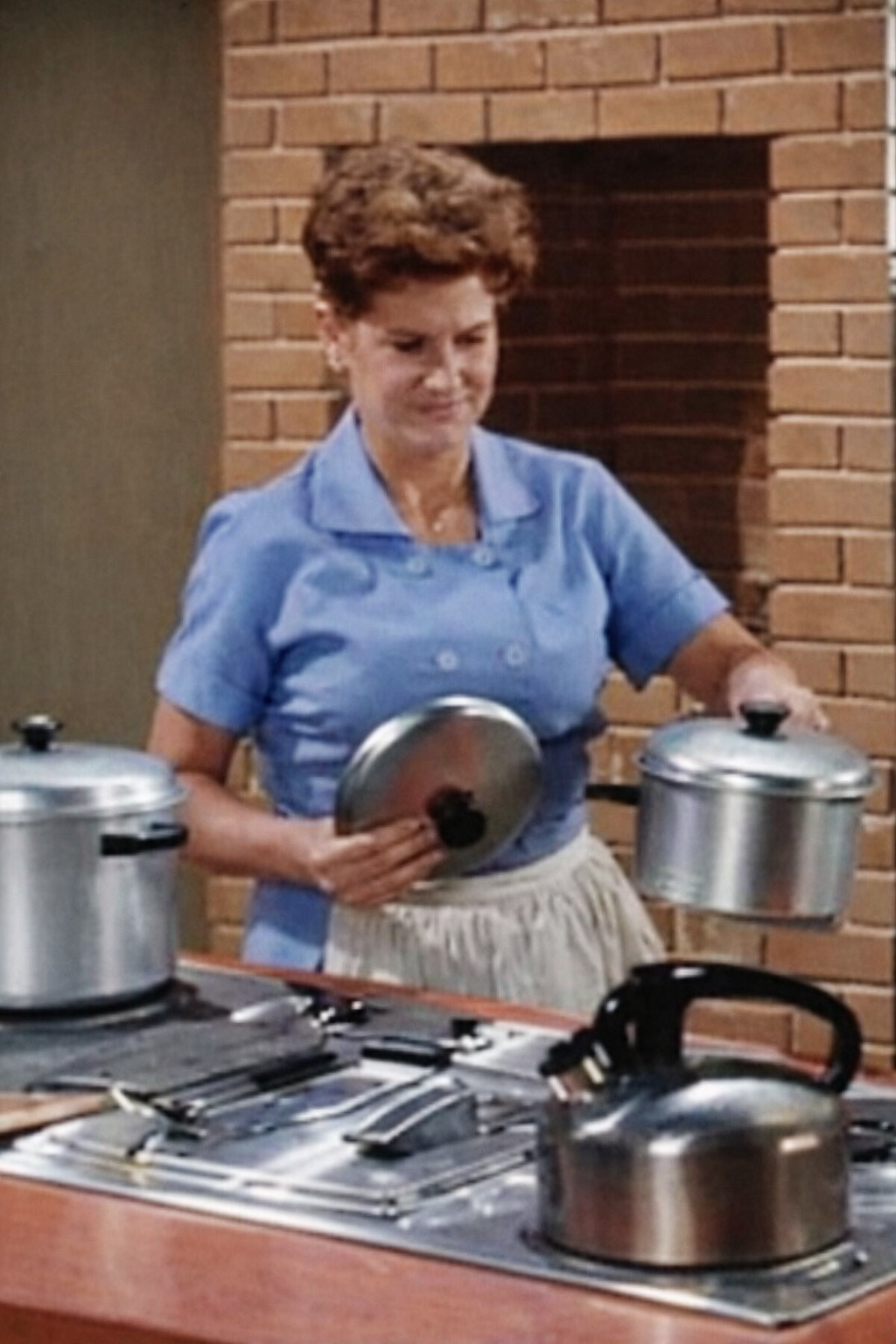
A series of production stills from the 1960s sitcom Bewitched has recently gone viral, sending shockwaves through social media. The most controversial image shows Elizabeth Montgomery on her iconic kitchen set, but the internet has fixated on a single, “impossible” detail.
The viral caption reads: “Stop scrolling and look at the reflection. This 1968 photo was hidden for decades because of one impossible detail. What’s reflected there shouldn’t exist for another forty years.”
But is there really a 21st-century gadget caught on a 1960s film set, or is there a far more logical explanation?
The “Impossible” Detail
Internet sleuths point to the shiny surfaces of the Stephens’ kitchen—specifically the glass on the cabinets and the chrome on the appliances. They claim that if you zoom in, you can see the distinct reflection of a modern smartphone or a high-definition digital camera being held by someone just off-camera. Since the show was filmed in 1968, the presence of such technology would be a literal glitch in time.
The Professional Breakdown
While the idea of a time-traveling cameraman is exciting, the truth is rooted in the “smoke and mirrors” of 1960s television production:
-
Studio Lighting “Blooms”: Bewitched used high-powered, multi-directional studio lights. When these lights hit curved glass or metallic surfaces (like the pots and kettle seen in the latest set photos), they create small, bright, rectangular glares. To a modern eye, these white shapes look exactly like the glowing screen of a smartphone.
-
The “Magic” Wires: The Bewitched kitchen was a hub of special effects. Many “reflections” are actually the shadows or glints from thin nylon wires and motorized rigs used to make pots “fly” and cabinets open by themselves. These mechanical parts often catch the light in ways that look like modern hardware.
-
Prop Design: Mid-century modern design was famously futuristic. The sleek, white, and chrome aesthetic of the 1960s—seen in everything from vanity cases to kitchenware—often mimics the minimalist look of 2026 technology, leading to “chronological confusion.”
Why This Image Stays Viral
This photo is a classic example of pareidolia—the human brain’s tendency to find familiar objects in random patterns. Because we live in a world of smartphones, our brains automatically interpret a rectangular light reflection as a digital device.
The real “secret” of the 1968 set wasn’t a time traveler; it was a production team that was so far ahead of its time that their set design and lighting still look like “the future” nearly sixty years later.