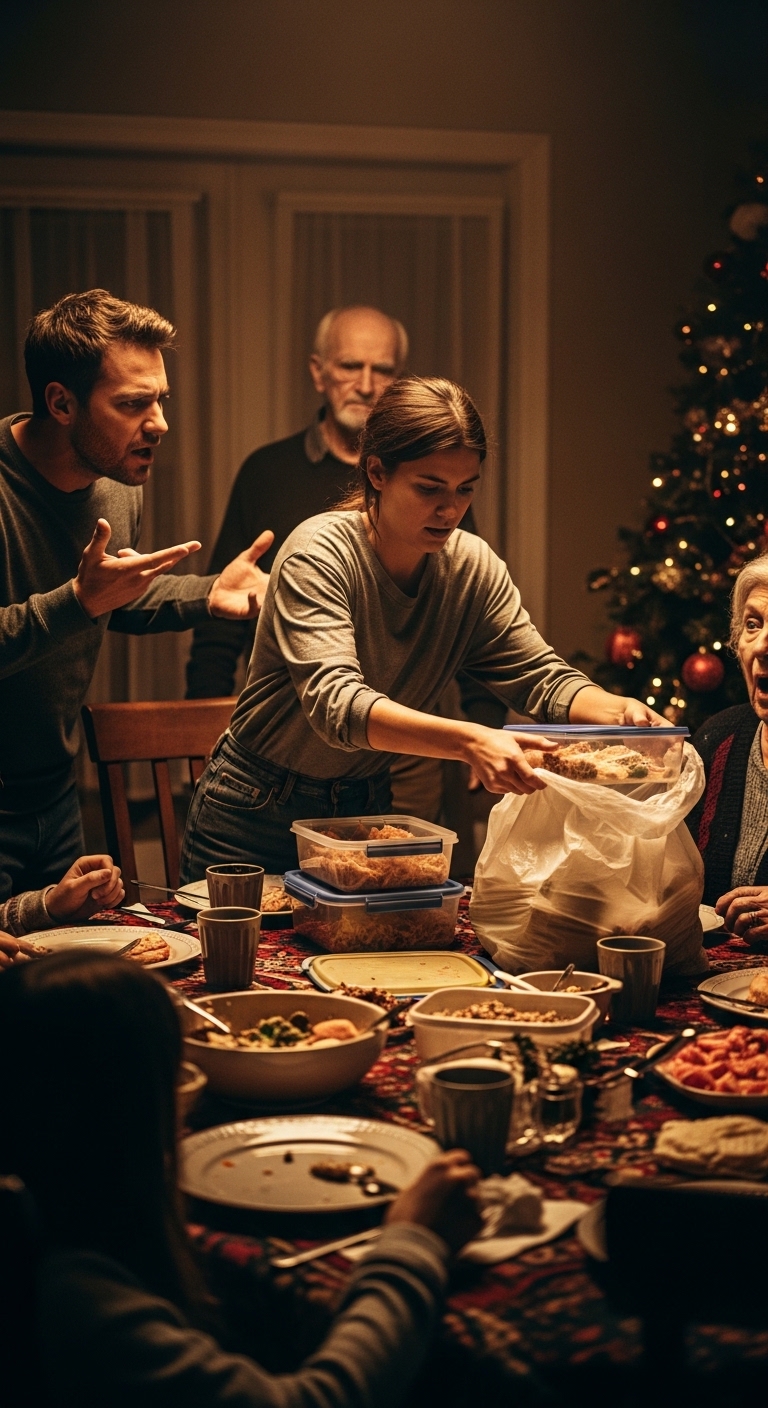
Kira had a personal reason to dread December 30th. For other people it smelled like pine needles and mandarins. For her it always carried the bitter hint of stress, medicine drops, and someone else’s impatience.
Her phone buzzed on the desk, nudging a stack of papers. The screen read: “Antonina Sergeyevna.” Kira closed her eyes for a second, feeling a tight knot form in her stomach.
“Kirochka, sweetheart, are you still at work?” her mother-in-law asked in a voice that sounded soft—too soft, the way cotton hides a pin.
“Good evening, Antonina Sergeyevna. I’m about to leave,” Kira answered, already knowing where this was heading.
“Good girl. I’m calling because… Zoya and I talked. We decided to celebrate New Year’s at my place. Just family. Only our own.”
Kira stayed silent. In her mother-in-law’s dictionary, “just family” meant one thing: Kira cooks, Kira pays, Kira cleans up—while the “family” relaxes.
“You’re so talented,” the older woman continued, not waiting for excitement. “Will you handle the table? I’m not feeling well; the doctor said I should rest. And the guests are counting on your duck. And aspic—you know how much Zoya’s husband loves it.”
“Alright,” Kira exhaled. Arguing would be like trying to stop a bulldozer with a toothpick. “I’ll cook.”
“You’re a saint,” her mother-in-law sighed—then added, “And don’t bother Igor. He’s tired. Men need to be protected.”
A message arrived with a list that looked more like a celebrity’s backstage demands than a grocery plan: a farm duck, beef tongue, three jars of red caviar (a specific kind), smoked delicacies, mold-ripened cheeses, and a “proper French drink” aged at least five years.
At the hypermarket, Kira stared at the growing pile in her cart and tried not to think about the total. At the register, the number flashed so high that she could have lived for a week in a decent all-inclusive hotel for that money. It was half her monthly salary—the same salary she used to cover their shared mortgage.
That evening she placed the receipt in front of her husband on the kitchen table. Igor lazily scrolled through the news with one hand and popped dumplings into his mouth with the other.
“Whoa,” he whistled, barely glancing down. “Mom went big. But it’s a holiday.”
“Igor, this amount is basically a mortgage payment. And it includes expensive alcohol,” Kira said quietly.
“But you got a bonus,” he shrugged, as if she were talking about bus fare. “You’re spending it on family. Not strangers.”
“And am I family?” she asked, her voice tightening. “I need winter boots. Last month you drained everything on upgrades for your car.”
“Don’t start,” Igor grimaced. “The car is necessary. And this is about respecting my mother. We have a shared budget—later we’ll balance it out.”
In their home, “later” had the habit of never arriving.
- Kira pays for the “family” celebration.
- Kira cooks and cleans.
- Igor calls it a shared budget.
- Antonina calls it “tradition” and “respect.”
The next day during lunch break, Kira walked into a watch boutique and did something she knew was foolish—an expensive, irrational kind of foolish. She bought the Swiss watch her mother-in-law had been admiring for months.
The price stung so sharply it made her want to laugh and cry at the same time. Yet Kira convinced herself it was a kind of ransom: if she made a grand gesture, maybe she would finally be accepted. Maybe the whispers behind her back would stop. Maybe she wouldn’t be treated like a convenient outsider who happened to be useful.
“I’ll take it,” she said, holding out her card. Her hand trembled anyway.
December 31st didn’t begin with holiday cheer. It began with a sore back and an alarm clock before sunrise. At six in the morning, Kira was already on her feet. Igor slept peacefully, warm and unconcerned—he had nothing to chop, boil, or bake. He would show up later as the “mood of the party.”
Her mother-in-law’s apartment greeted Kira with stuffy air and the faint smell of medicine. Antonina Sergeyevna sat in an armchair in a dressy robe, looking grand—like someone who expected to be served.
“The pickles look pale,” she commented while Kira worked on the salad. “You should’ve bought them at the market from private sellers. Supermarkets are all chemicals.”
“Those are the ones you asked for,” Kira replied evenly.
“Then it’s a bad variety,” her mother-in-law said without blinking. “Cut everything smaller. Zoya doesn’t like big pieces.”
Kira gripped the knife and kept going. The clock ticked. The food became dishes. Her back throbbed, but her face stayed calm.
Igor finally arrived around three in the afternoon—cheerful, rosy from the cold, smelling like winter and celebration.
“Mom! Hi! Wow, it smells amazing!” he said, kissing his mother’s powdered cheek.
“My son!” Antonina’s expression softened instantly. “Sit down, dear. Kirochka will pour you some tea.”
Kira wiped her hands on her apron. “Igor, we forgot bread and mineral water. Please run to the store.”
“Kira, I just took my shoes off. My legs are killing me. The traffic was awful,” he complained.
“Go for a little walk, son,” his mother added. “And get Borjomi—in glass. Kira always tries to save money and buys plastic, and then the water tastes like the table.”
Igor left.
And then he vanished.
He returned three hours later with one bottle of water and an apologetic smile that felt more irritating than sweet.
“Where were you? The store is next door,” Kira asked under her breath so Antonina wouldn’t hear.
“I ran into Tolya outside,” Igor whispered back. “His tire went flat, the spare was stuck… we helped him out. You can’t leave a friend on New Year’s!”
He didn’t smell like a car repair. He smelled like a strong drink and mandarins. Kira looked at him for a long moment, then turned away. She had no strength left for a fight. There was still too much to finish.
- Duck with apples
- Aspic and cold appetizers
- Layered salads
- Tartlets topped with caviar
By seven, the table looked like a full catering spread—Kira’s work made visible. The kind of feast people praise while forgetting who stood over the stove all day.
Zoya arrived with her husband and kids: loud, dressed up, bringing bags that crinkled with gifts and snacks.
“Mom, this is gorgeous!” Zoya exclaimed. “You’re a hero! How did you manage all this while feeling unwell?”
Antonina Sergeyevna modestly adjusted her hair. “Well, who else would do it, sweetheart? Young people these days are delicate—they just sit on their phones. I had to do it myself. I guided, I supervised, and I even did some chopping. I’m exhausted.”
Kira froze in the doorway with a hot tray in her hands.
Igor heard every word. He didn’t correct his mother. He didn’t say, “Actually, Kira’s been cooking for ten hours.” He simply scooped salad onto his plate and pretended to be busy looking for a fork.
Something inside Kira didn’t explode—it simply went quiet, as if a light had been switched off in the room where her patience used to live.
Dinner conversation rolled along in the same familiar pattern.
“Kira, why are you so gloomy?” Zoya’s husband asked loudly, pouring himself another drink—funded, as always, by someone else. “It’s a holiday! Smile!”
“She’s tired,” Antonina explained with a condescending tone. “Not used to it. We’re made of sterner stuff: we can work a shift and still set a table. Today’s generation gets worn out after a little effort.”
Igor chuckled, agreeing with his mother like it was a harmless joke.
When midnight arrived and the speeches ended, Antonina clapped her hands. “Now—presents!” she announced, solemn as if hosting a ceremony.
She began handing out gifts from under the tree.
The grandchildren received expensive gadgets. Zoya got a spa certificate. Zoya’s husband received a professional tool kit—the kind people dream of.
“And this is for my dear son,” Antonina said tenderly, offering Igor a bag. “Wear it, my love.”
Igor unwrapped a branded angora sweater. “Thanks, Mom!” he beamed, pressing it to his chest.
The gift bags ran out.
Kira sat with an empty glass, her fingers tightening around the velvet watch box hidden in her pocket. She wasn’t expecting anything dramatic. Even a simple, ordinary token would’ve been fine.
But beneath the tree, for her, there was nothing.
In that silence, Kira finally understood what she had been playing in this family: not a cherished member, but a convenient role—temporary, replaceable, and expected to pay for the comfort of everyone else.
And once you see that clearly, it becomes impossible to unsee.
Conclusion: That New Year’s table was generous, beautiful, and expensive—but it also revealed the truth. When respect is demanded but never returned, and when “family” means one person gives while the others take, love turns into exhaustion. Kira didn’t end the night with fireworks in her heart—she ended it with a decision quietly forming: her life could no longer be built on someone else’s entitlement.