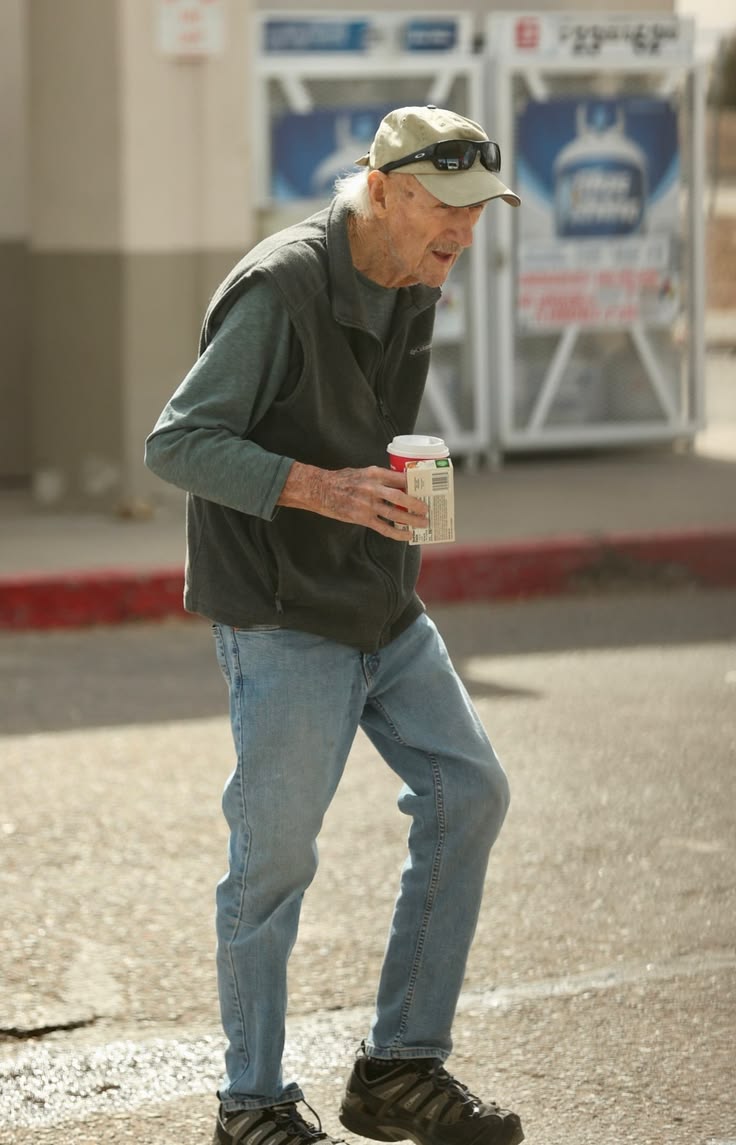
Spotted out for a casual morning coffee run in a baseball cap, fleece vest, and jeans, Clint Eastwood carries the same no-nonsense simplicity that has defined his life and career for nearly seven decades. While most stars of his era long ago retired from the spotlight, Eastwood’s remarkable work ethic—both in front of and behind the camera—has made him one of the most durable and respected figures in motion picture history.

From Odd Jobs to Television Stardom
Born in San Francisco, California, on May 31, 1930, Clinton Eastwood Jr. moved frequently across the West Coast during the Great Depression as his father searched for work. Before stepping onto a soundstage, Eastwood worked a wide range of rugged jobs, including lumberjack, forest firefighter, and swimming pool digger, and served in the U.S. Army at Fort Ord during the Korean War era.
After signing a contract with Universal Pictures in the mid-1950s and playing small uncredited parts, his career took off in 1959 when he landed the role of Rowdy Yates on the hit CBS Western series Rawhide. Over eight seasons, the show turned him into a familiar face in millions of households.

Redefining the Screen Hero
In 1964, Eastwood traveled to Europe to team up with Italian director Sergio Leone for A Fistful of Dollars, followed by For a Few Dollars More (1965) and The Good, the Bad and the Ugly (1966). As the enigmatic “Man with No Name,” Eastwood reinvented the Western anti-hero—replacing long speeches with narrowed eyes, dry wit, and quiet authority.
Returning to Hollywood as a major box-office draw, he cemented his status as an action icon with Dirty Harry (1971), portraying uncompromising San Francisco Police Inspector Harry Callahan across five films.

Academy Award Triumphs Behind the Camera
Not content merely to star in hit movies, Eastwood made his directorial debut with the psychological thriller Play Misty for Me (1971), launching a second career that rivaled his achievements as an actor. Known for his calm, efficient style on set, he earned widespread critical acclaim for dramas such as Bird (1988) and Mystic River (2003).
He claimed four Academy Awards—winning Best Picture and Best Director for both his revisionist Western masterpiece Unforgiven (1992) and the poignant boxing drama Million Dollar Baby (2004). Even in his eighties and nineties, he continued to direct major studio releases, including American Sniper (2014), Sully (2016), The Mule (2018), and the courtroom thriller Juror #2 (2024).
A Quiet Life by the Coast
Off-screen, Eastwood has long preferred the quiet coastal community of Carmel-by-the-Sea, California—where he famously served as mayor from 1986 to 1988—over the bustle of Los Angeles. Whether stepping out for a morning coffee or commanding a film set in his nineties, Clint Eastwood remains a towering symbol of American cinema whose work continues to inspire audiences around the world.